
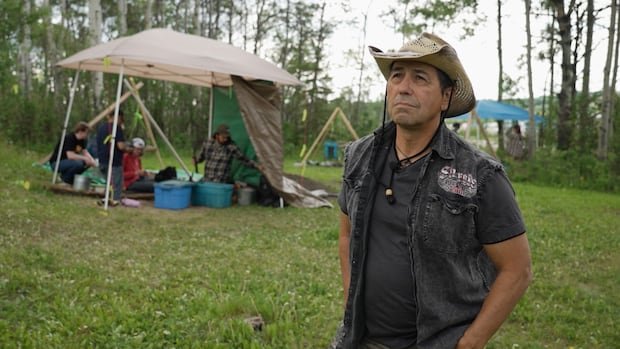
An archaeological field school situated at a national historic area close to Fort St. John, B.C., is providing insights into 12,500 years of First Nations history by discovering ancient stone tools and animal remains. Tse’k’wa, under ownership by Doig River, Prophet River, and West Moberly First Nations, has been a site of habitation for Dane-zaa ancestors over many generations.
Describing it as an ancient archaeological site, West Moberly Elder Laura Webb emphasized the longstanding presence of the Dane-zaa people, spanning over 12,500 years. The artifacts found at Tse’k’wa date back to ancient times, showcasing the enduring history of the indigenous communities.
Tse’k’wa is among the 57,000 known archaeological sites in the region, offering a glimpse into human settlement in North America since the last ice age. The nations overseeing Tse’k’wa view the site as a platform to share their rich history, culture, and language with interested individuals.
While the public can visit the site, the field school activities are carried out by students from the University of Northern British Columbia. Elder Laura Webb described the site as a gathering place to impart cultural teachings and showcase the harmonious relationship that existed between the indigenous people and nature.
Rich in history, the area was once home to giant bison thousands of years ago as the landscape transitioned from grassland to boreal forest following the retreat of a glacial lake. Notably, the site is believed to have served as a ritualistic location, evident by the burial of two ravens a millennium apart, symbolizing spiritual significance across various Indigenous cultures.
Archaeologists have uncovered evidence of stone tools, ancient animal remains, and even fragments of obsidian, a rare material prized for its sharp edge retention. Additionally, a stone bead dating back 10,500 years was found at Tse’k’wa, marking the oldest human adornment discovered north of the Yucatán Peninsula.
Garry Oker, an elder from Doig River First Nation, highlighted the alignment of the discovered artifacts with the oral traditions passed down through generations. The artifacts validate the stories of ancient life among giant animals and the evolving history shared by the community.
The Tse’k’wa Heritage Society, established in 2012 by the three nations, aims to preserve the site as an interpretive center for cultural teachings and communal gatherings. The name “Tse’k’wa,” meaning “rock house” in the Dane-zaa Záágéʔ language, refers to the cave on-site, where visitors can explore the oral history and its correlation with the archaeological findings.
Alyssa Currie, the executive director of the Tse’k’wa Heritage Society, emphasized the significance of the site in reconnecting the Dane-zaa people with their cultural heritage and sharing their ancestral stories with the wider community. The artifacts excavated at Tse’k’wa serve as a tangible link to the enduring Dane-zaa traditions and narratives still cherished today.