
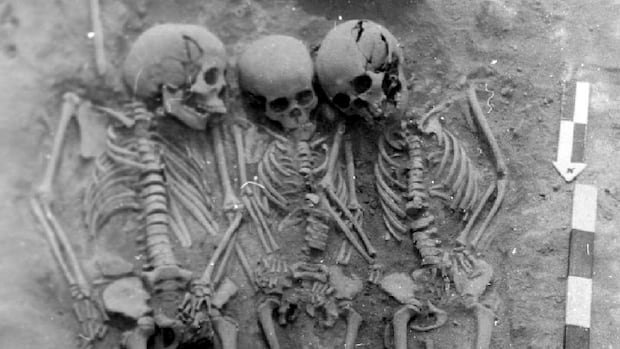
Archaeologists have uncovered the long-standing mystery of the mass burial of deceased children by ancient hunter-gatherers in Russia 5,500 years ago. The revelation indicates that these children fell victim to an early outbreak of the plague caused by Yersinia pestis, the same bacterium responsible for the infamous Black Death in 14th-century Europe. This discovery sheds new light on the ancient spread and impact of the disease.
A recent study, published in Nature by an international research team that includes Canadian scientists, highlights that the plague was already lethal to humans millennia before the well-known historical outbreaks. Surprisingly, the plague was able to disseminate among hunter-gatherer communities, not solely within densely populated settlements that emerged later.
Lead author of the study, Ruairidh Macleod, a postdoctoral researcher at Oxford University, expressed astonishment at the early evidence of large-scale plague outbreaks among these ancient societies. The research team, led by Andrzej Weber of the University of Alberta and Angela Lieverse of the University of Saskatchewan, has been investigating remains from a prehistoric hunter-gatherer community near Lake Baikal in Russia for decades.
Lieverse’s expertise in analyzing human bones facilitated the identification of the deceased individuals’ ages and sexes, revealing the prevalence of children under 12 among the buried individuals. Collaboration with DNA specialist Macleod led to the identification of the plague bacterium in the remains, providing a breakthrough in understanding the cause behind the mass child burials.
Genetic analysis indicated that the strain of plague responsible for the ancient outbreak possessed a “superantigen” that triggered severe inflammatory reactions, particularly affecting children. Notably, this strain lacked the genes necessary for flea-borne transmission, distinguishing it from the bubonic plague strain.
The researchers found evidence of human-to-human transmission during the Lake Baikal outbreak, affecting multiple family groups. Tragically, the impact of the plague on children in these ancient communities was profound, as evidenced by the simultaneous deaths of young girls who were revealed to be sisters and cousins through DNA analysis.
This discovery underscores the evolution and transmission dynamics of deadly pathogens like the plague over time and highlights the importance of studying ancient diseases to prepare for potential future threats. Lieverse emphasized the poignant narrative revealed by the prehistoric remains and DNA evidence, emphasizing the tragic toll the plague took on these ancient populations.