
Canada’s progress in reducing carbon emissions has faced a slowdown, as reported by the federal government to the UN. The latest National Inventory Report for 2024 shows minimal changes in emissions across various economic sectors. Dave Sawyer, a principal economist at the Canadian Climate Institute, expressed concerns about meeting the 2030 emissions target due to the fragile progress and the risk of emissions increasing.
Released without public announcement, the 2024 emissions totaled 685 million tonnes of CO2 equivalent, slightly lower than the previous year. This marks a 10% decrease from 2005 levels, aligning with Canada’s goal to reduce emissions by 40-45% below 2005 levels by 2030 under the Canadian Net-Zero Emissions Accountability Act.
Despite significant reductions in electricity generation emissions since 2005, driven by the phase-out of coal plants and increased use of cleaner energy sources, such as hydropower and nuclear energy, challenges remain. The rise in gas-powered electricity generation in Alberta and Ontario, coupled with the growth of renewables lagging behind, poses concerns for the future.
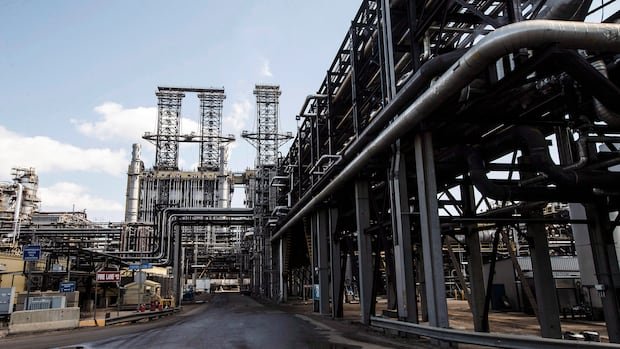
Meanwhile, the oil and gas industry, the largest emissions source in Canada, has seen a continuous increase in emissions since 2024, particularly in Alberta and British Columbia. Oil and gas emissions, which peaked in 2014 before declining and then rising again, are mainly driven by oilsands production in northern Alberta. The lack of emissions controls in oilsands production is offsetting progress made in other areas, such as electric vehicles and cleaner energy sources.
Sawyer emphasized the need to address growing oilsands emissions to prevent Canada’s overall emissions from stagnating. Without effective measures, the current emission trends are unlikely to improve significantly in the future.