
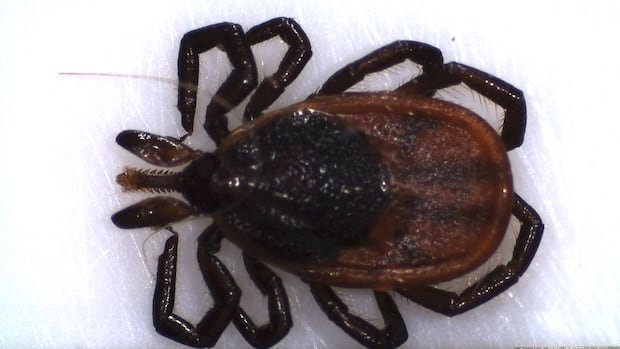
Nova Scotia’s snowy winter may not lead to a decrease in tick numbers this year, as experts suggest that deep snow can actually provide insulation for ticks, helping them survive. Laura Ferguson, an assistant professor at Acadia University, mentioned that the snow cover acts as a protective layer for ticks, allowing many of them to survive the winter.
Despite some cold periods in December and January, the most significant drop in temperatures that could kill ticks occurred after the snow had already covered the ground. The Halifax airport experienced continuous snow cover from January 18 to March 21, lasting 64 days, the longest period since the winter of 2020.
Ticks typically seek sheltered areas under leaf litter during winter, where they can survive for months without feeding. Laura Ferguson explained that ticks can endure temperatures between 0°C to -5°C for weeks or even months. Sudden temperature fluctuations or prolonged exposure to temperatures below -10°C can be fatal to ticks, as ice formation within their bodies can cause tissue damage.
Jantina Toxopeus, an associate professor at St. Francis Xavier University, conducted research on how temperature affects ticks. She noted that ticks tend to freeze at temperatures below -15°C, but their adaptability to gradual temperature changes allows them to survive better. Despite extreme cold spells in the past, Nova Scotia’s tick population remained resilient, suggesting that ticks can withstand harsh winter conditions.
Overall, experts like Laura Ferguson do not foresee a significant change in this year’s tick population compared to previous years, as ticks have demonstrated their resilience to cold temperatures. The long-lasting snow cover in Nova Scotia this winter is expected to have more of a supportive rather than hindering effect on tick survival.
[Note: For more information, you can visit the source link provided.]