
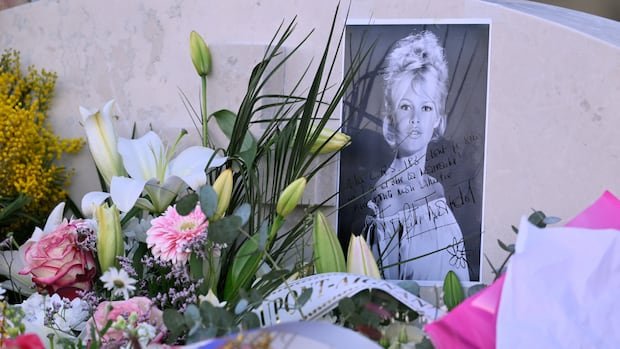
Brigitte Bardot was laid to rest on Wednesday in a private ceremony followed by a public tribute in the town of Saint-Tropez, located on the French Riviera where she resided for more than 50 years after stepping away from her acting career at the peak of her popularity.
The renowned animal rights advocate and supporter of far-right ideologies passed away on December 28 at the age of 91 at her residence in southern France due to cancer complications following two surgical procedures, as disclosed by her husband, Bernard d’Ormale, in an interview with Paris Match magazine.
During the funeral procession, residents and fans paid their respects as Bardot’s casket, once a global icon and prominent screen goddess of the 1960s, was carried through the town’s narrow streets. The service commenced with a rendition of Maria Callas’ Ave Maria at the Notre-Dame-de-l’Assomption Catholic Church, attended by Bardot’s family members, including her husband, son, and grandchildren, as well as guests invited by her family and the Brigitte Bardot Foundation dedicated to animal welfare.
Mourners, including close friend and foundation secretary general Max Guazzini, expressed profound sorrow and grief during the ceremony. Hundreds of individuals gathered in Saint-Tropez to witness the farewell event broadcasted on large screens installed at the port and two public squares.
Having considered Saint-Tropez her sanctuary away from the limelight that once defined her celebrity status, Bardot was laid to rest in a discreet ceremony at a cemetery overlooking the Mediterranean Sea. The burial ground, also the final resting site for several cultural luminaries, includes filmmaker Roger Vadim, Bardot’s former spouse and director of her breakout film And God Created Woman, which catapulted her to international fame.
Retiring from the film industry in 1973 at the age of 39 after starring in over two dozen films worldwide, Bardot had established her home at La Madrague, a coastal villa, several decades ago. Despite stepping away from acting, she maintained a prominent public presence for her extensive advocacy work in animal rights and her controversial affiliation with far-right political beliefs.
Notably, Bardot’s stand against the seal hunt in Newfoundland drew criticism for disregarding Indigenous traditions, and she faced legal repercussions for inciting racial animosity, being convicted and fined on multiple occasions in French courts for her outspoken opposition to the Muslim ritual slaughter of sheep during annual religious observances.
Reflecting on her convictions and activism, Bardot acknowledged her occasional fervor, attributing it to her frustration with the slow pace of progress in advocating for her causes.