
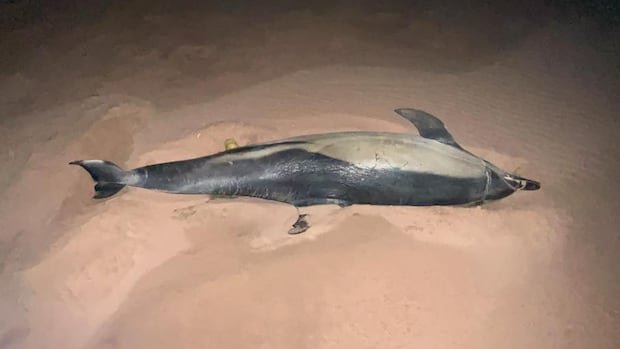
A dolphin found stranded on Blooming Point Beach last October was examined through a necropsy which revealed a severe infestation of parasites. Tonya Wimmer, the Marine Animal Response Society’s co-executive director and conservation director, disclosed that the dolphin had developed critical pneumonia due to a heavy load of lungworms, impairing its breathing.
The distress call concerning the stranded female common dolphin was received on the evening of October 10, 2025. Witnesses initially believed the dolphin was in decent condition. Fisheries officials arrived at the scene approximately an hour later to find the dolphin still alive but struggling to breathe.
Due to the late hour, windy weather, and safety concerns, officials made a difficult choice to leave the dolphin overnight for reevaluation the next morning. Unfortunately, by the following day, the dolphin had passed away. The carcass was retrieved by provincial staff and sent to the Canadian Wildlife Health Cooperative at the Atlantic Veterinary College in Charlottetown for further examination.
Veterinarians conducting the necropsy discovered the dolphin had trematodes, commonly known as flukes, in its ears which likely disoriented the animal, leading to its stranding. Wimmer emphasized that the dolphin’s poor health condition was a result of various factors contributing to its compromised state.
Wimmer noted that finding a lone dolphin is worrying as they typically travel in groups, indicating potential health issues or disorientation. Instances of wildlife becoming stranded, whether on land or in water, are not uncommon. Wimmer highlighted the importance of knowing how to respond to such situations and underscored the public’s care and concern for animals in distress.
The incident serves as a reminder of the natural challenges wildlife face and the compassion people have for these creatures in distress.