
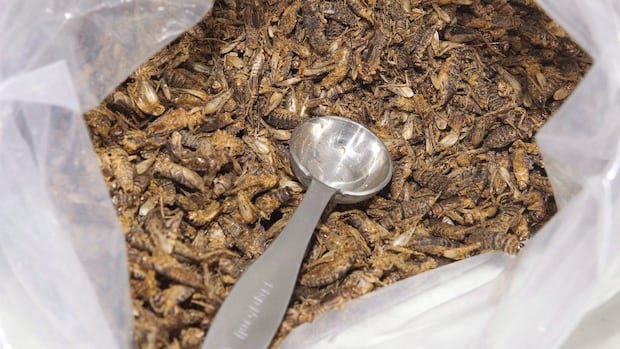
Insect farming was anticipated to expand rapidly, with London, Ontario witnessing the establishment of Aspire Food Group Canada, described as the world’s largest cricket farm. Spanning 150,000 square feet, this fully automated facility was designed to accommodate billions of insects and generate millions of kilograms of protein annually. Crickets are promoted as an eco-friendly protein source, requiring less land compared to traditional livestock and offering a solution to global food insecurity.
The endeavor garnered international support by winning the $1-million US Hult Prize in 2013, endorsed by former U.S. president Bill Clinton. It attracted investments from various countries including the United States, Canada, Ireland, and South Korea, alongside receiving substantial federal loans and grants. However, after commencing operations in 2022, the facility fell into receivership in 2025, with the recovery of public funds remaining undisclosed due to a court order sealing the final sale price.
Despite several attempts to contact Aspire Food Group’s founders, none were willing to provide on-the-record statements. The downfall of the world’s largest cricket farm was not abrupt but stemmed from a discrepancy between the anticipated scale supported by investors and the actual demand for edible insects, which did not materialize as expected.
According to Sadaf Mollaei, an assistant professor at the University of Guelph specializing in sustainable food systems and consumer behavior, a significant obstacle is the reluctance of most North Americans to consume insects due to a perceived “yuck factor.” Additionally, the high cost of crickets, such as a 454-gram bag of cricket powder retailing for $49.99, poses a challenge despite their environmental and health benefits.
The slow development of the insect-eating market in North America has left producers in a dilemma, as they cannot reduce prices without expanding their customer base, yet attracting more consumers is difficult without price adjustments. Darren Goldin, an insect farmer at Entomo Farms in Norwood, Ontario, highlighted the ongoing challenge of pricing within the industry, emphasizing the need for a delicate balance to drive growth.
While Aspire utilized stacked plastic bins to house crickets, Entomo Farms adopted open-room setups with “cricket condos” made of cardboard for easy monitoring. Goldin emphasized the necessity of constant vigilance in cricket farming to swiftly address changing conditions, contrasting it with the challenges posed by automated systems like Aspire’s.
Court documents revealed that Aspire encountered operational difficulties due to environmental variations, design modifications, and equipment issues, leading to underperformance compared to its initial projections. The company operated at half capacity by June 2024, requiring additional financing to rectify production challenges.
Farm Credit Canada (FCC) was owed approximately $41 million at the time of receivership, with the exact recovery amount undisclosed. Agriculture and Agri-Food Canada (AAFC) also provided funding to Aspire, with a significant portion still outstanding. The property was eventually sold to Halali Group Holdings in October 2025, with the sale price remaining confidential, leaving unanswered questions regarding the amount of public funds lost in the process.