
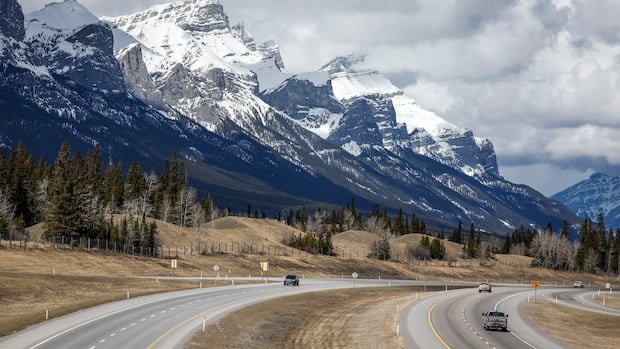
A snow drought of historic proportions in the western U.S. is sparking worries about future water scarcity and wildfires in the upcoming summer season. Recent findings from a Canadian research study indicate that these conditions might signify a prolonged pattern that could jeopardize water resources for millions of people nationwide.
Current snow coverage in the western U.S. is significantly lower than typical levels for this time of year, marking the lowest recorded extent since NASA’s Terra satellite monitoring commenced in 2001. The decrease in snowfall is believed to be linked to a warming climate trend. Research conducted by Concordia University in Montreal revealed a reduction in snow accumulation and water content in parts of Western Canada between 2000 and 2019.
Although the affected areas constitute only a small portion of the country, primarily impacting the headwaters of major Canadian Rockies rivers, there were also minor decreases observed in other southern regions of Canada. According to Ali Nazemi, the study’s co-author and associate professor of engineering at Concordia, this cumulative decline affects 14 out of the 25 major drainage basins in Canada.
The diminishing snow levels have far-reaching implications, affecting municipal water supplies, agriculture, lake levels, shipping activities, and increasing the risk of wildfires in Canadian forests. Kate Hale, an assistant professor at the University of British Columbia, likened the snowpack in mountainous areas to a natural water tower that stores and releases water as needed, particularly during the critical summer months for various human activities.
The ongoing ski season at major resorts in the region has been severely impacted by the low snow conditions. Ski operations across British Columbia have either been halted or reduced due to inadequate snowfall and warmer temperatures. Vail Resorts, the owner of multiple ski slopes in Canada and the U.S., reported one of the poorest early season snowfalls at its western U.S. resorts. Vancouver is also experiencing its first snowless winter in 43 years.
Unlike typical snow droughts caused by insufficient precipitation, this year has witnessed near-normal precipitation levels, primarily falling as rain instead of snow. This phenomenon, termed a “wet snow drought” by Alejandro Flores, a geosciences professor at Boise State University, is consistent with the anticipated shift towards more rain and less snow in a warming environment.
The snow cover in mountainous regions serves as a critical water reservoir, releasing water as it melts during warmer seasons. The reduced snowpack not only impacts water availability for millions but also raises concerns about heightened water stress in forests, potentially increasing the risk of wildfires across North American forests.
Nazemi’s team believes that the declining snow trends affecting the Canadian Rockies are extending southward into the western U.S. They introduced a new metric, “snow water availability,” to precisely gauge the water content within snowpacks. By utilizing satellite technology for remote sensing, they analyzed data from 2000 to 2019 covering Canada and Alaska.
The watersheds most affected by diminishing snow water were identified as the Okanagan in B.C., the Assiniboine-Red River basin in Manitoba, and the Saskatchewan River basin. The reduced flows could have cascading effects on crucial rivers like the Fraser and St. Lawrence, impacting water supply and hydropower generation for millions of individuals.
Previous instances of declining snow cover have already impacted water security, such as the severe drought in central B.C. in 2015 and the Great Lakes water level drop in 2012. As these vulnerabilities intensify, further research is necessary to assess the speed and severity of potential future water shortages.
Hale emphasized the significance of studying these impacts to facilitate necessary adaptations for water management. As natural water towers like mountain snowpacks undergo changes, there is a growing need to rethink water use strategies to ensure sustainability in the face of evolving climate conditions.