
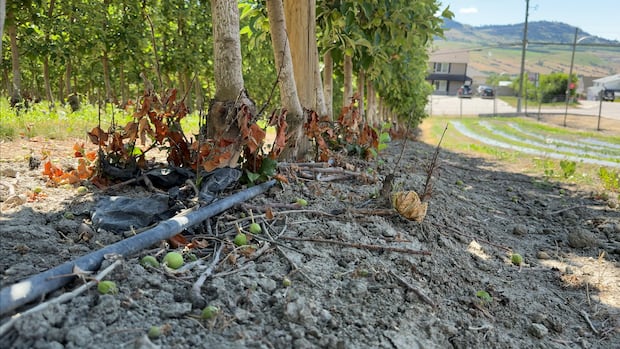
Farmers in Vernon are adapting to water restrictions enforced by the Regional District of the North Okanagan and the Greater Vernon Water Utility due to critically low reservoir and lake levels. The Stage 3 restrictions include a mandatory 70% reduction in water usage for all farmers, causing concerns among agricultural producers.
Adrian Arts, an executive director at the B.C. Fruit Growers’ Association, highlighted the potential negative impact of these restrictions on trees, stating that such drastic reductions in water supply could harm or even kill trees in orchards. The association is urging government support to safeguard the future of agriculture in B.C., emphasizing the challenges faced by farmers, including previous incidents like heat domes and deep freezes.
Following the implementation of the restrictions, discussions were held with major water users in the area, primarily farmers, to explore options for reallocating water quotas. David Sewell from the Regional District of North Okanagan mentioned farmers engaging in negotiations to share water resources with neighbors.
Despite the challenges, the community has largely cooperated with the restrictions, which include bans on non-essential activities like lawn watering, pool filling, and boat washing. Water efficiency coordinator Amanda Summerfelt noted the overall reduction in water usage and exceptions made for sports fields in certain areas to maintain functionality.
Some entities, such as golf courses, utilize reclaimed water from treatment plants, which remains unrestricted. Greater Vernon Water has observed a significant decrease in water consumption since the restrictions were put in place. Additionally, residents in the Lavington area have been temporarily transitioned to an alternative water source to prioritize surface water for agricultural purposes.