
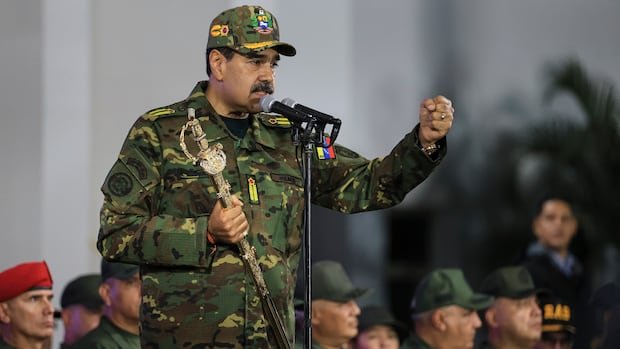
On Saturday, the United States initiated a significant military operation in Venezuela, resulting in the capture of the country’s president, Nicolás Maduro, and his wife, Cilia Flores. President Donald Trump announced on his Truth Social platform that the couple had been transported out of Venezuela with the assistance of U.S. Law Enforcement.
U.S. Attorney General Pam Bondi confirmed via social media platform X that Maduro and his wife have been indicted in New York. Venezuelans are anxiously awaiting updates on the situation, while global leaders are coordinating with embassies to monitor the aftermath of the operation, which represents the most extensive U.S. intervention in Latin America since 1989.
Maduro’s background traces back to humble beginnings, born on November 23, 1962, into a working-class family. Initially employed as a bus driver, he rose to political prominence by supporting Hugo Chávez’s socialist policies after Chávez’s release from imprisonment following a failed coup.
Following Chávez’s death in 2013, Maduro succeeded him as president. His tenure was marked by severe economic collapse, characterized by hyperinflation and persistent shortages. Allegations of fraudulent elections, human rights abuses, and crackdowns on dissent have tarnished Maduro’s administration, prompting millions of Venezuelans to flee the country.
Despite winning a controversial third term in January 2025, Maduro’s victory was marred by international condemnation of electoral irregularities and reports of mass arrests of dissenters. The United Nations has documented human rights violations and crimes against humanity committed by the Bolivarian National Guard under Maduro’s regime.
Maduro and his wife now face criminal charges in the U.S., stemming from corruption allegations and other offenses dating back to 2020. While the U.S. and other nations have imposed sanctions on Maduro’s government, questions have been raised about the legal justification of the recent military operation, with politicians worldwide seeking clarity on the circumstances surrounding the attack.