
An exotic tree that has become more common in Toronto could be causing issues for residents in the area.
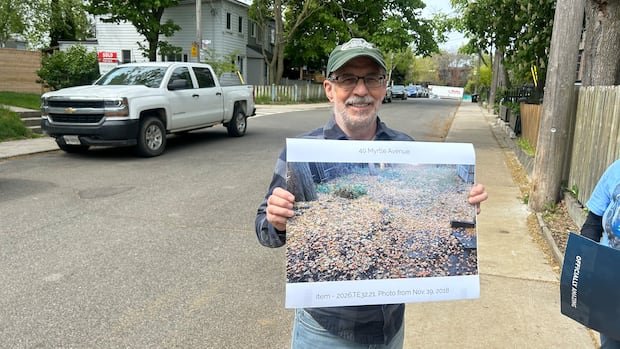
After residing in their Leslieville residence for over two decades, Alan Page and his spouse have always had a ginkgo tree in their backyard, located near Jones Avenue and Gerrard Street E. However, the tree has recently started producing sticky and smelly fruit during the autumn season, which is challenging to clean and attracts flying insects like bees and wasps, as per Page’s statement to CBC Toronto.
The foul-smelling fruit from the female ginkgo tree has led residents, arborists, and city council members to compare its odor to a mix of dog waste and vomit. Many homeowners have been seeking permission to remove these trees due to the unpleasant odor, even though the trees are in good health.
Page sought approval to have the tree removed earlier this year, but the city’s forestry staff rejected his request. His appeal is set to be reviewed by the Toronto and East York Community Council on Thursday, with staff recommending against granting the appeal.
Coun. Josh Matlow recently persuaded the council to ask forestry staff to explore innovative solutions to assist homeowners struggling with the ginkgo trees and their smelly fruit, which ripens and falls in October, impacting the quality of life for residents.
According to arborist Marc Ambeau, ginkgo trees, originating from China, have been growing in Toronto for several decades, with the female trees now reaching maturity and producing fruit, leading to the current issues faced by homeowners.
To remove a tree with a diameter of 30 cm or more, homeowners must obtain a permit from the city, even if it is on private property, with potential fines of up to $100,000 for violating the bylaw. The city aims to increase tree coverage to 40% by 2050, currently standing at around 30%.
While there is a motion for staff to propose solutions by 2027, Matlow hopes for immediate adjustments to the tree removal regulations concerning ginkgo trees.
One of Page’s neighbors, James Chiu, has supported Page’s appeal to remove the ginkgo tree due to the inconvenience caused by the fruit rotting in his yard. Chiu mentioned the challenges faced with the decaying fruit attracting animals and creating unpleasant smells.
If approved, city staff suggest that Page plant five new trees in place of the ginkgo tree. Despite the situation, Page is willing to comply, as he desires a peaceful backyard without the nuisance of the ginkgo tree’s fruit.
Ambeau advises homeowners to appreciate the benefits of the trees, such as shade and wildlife habitat, and learn to manage the drawbacks, rather than removing every female ginkgo tree due to its seasonal odor.