
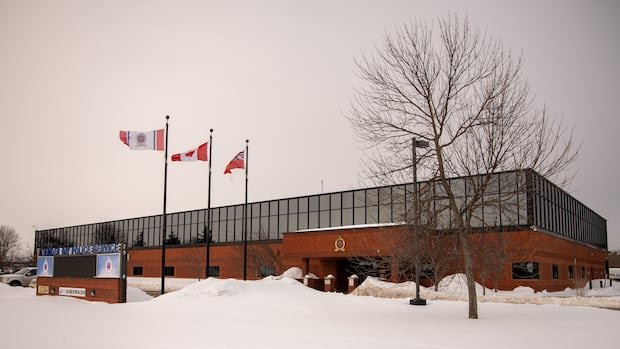
Thunder Bay, Ontario, maintains its position with the highest homicide rate in Canada, as per the most recent data released by Statistics Canada. The annual report on homicide trends, unveiled on December 2 and based on 2024 data, reveals that Thunder Bay’s homicide rate increased from 5.41 to 6.08 per 100,000 population that year, surpassing Chilliwack, British Columbia (4.75), and Winnipeg (4.66) in the rankings.
In 2020, Thunder Bay marked its fifth consecutive year as the city with the highest homicide rate in the country. While it briefly held the second-highest rate in Canada in 2021, it reclaimed the top spot in 2022 and 2023.
The latest report from Statistics Canada emphasizes that the homicide rate serves as a crucial indicator for evaluating violence levels, community safety, and social welfare within a nation. Policymakers, both domestic and international, use homicide data to comprehend the scope of violence, identify patterns, and formulate suitable responses.
Despite a national decrease of four percent in the homicide rate for 2024, Thunder Bay’s figures have remained stable. The Thunder Bay Police Service spokesperson informed CBC News via email that there were 53 homicides reported in Thunder Bay between 2020 and 2025.
In 2025, Thunder Bay reported seven homicides and 295 sudden deaths, a slight decrease from the previous year’s eight homicides and 300 sudden deaths. The most recent sudden death incident occurred on Christmas Day on Regent Street in the city’s north end.
The City of Thunder Bay is actively developing a new community safety and well-being plan to address concerns about neighborhood safety. Throughout 2025, the city conducted numerous public engagement sessions and an online survey to collect community feedback.
In terms of law enforcement initiatives, the Thunder Bay Police Service introduced several new safety programs in the past year. These include a housing safety unit pilot project involving specialized constables patrolling social housing buildings. Additionally, the police force secured provincial funding to implement new forensic technologies, such as a bullet recovery program and LiDAR software for crime scene reconstruction.
Funds were also allocated to a mental health and addictions program named the Integrated Mobile Police Assessment Crisis Team, designed to redirect non-emergency calls to appropriate support services instead of police or hospital responses.
Recently, the Thunder Bay Police Service Board approved the police service’s 2026 operational budget request, totaling approximately $64 million. This budget, subject to city council approval as part of the municipal budget process, represents a nine percent increase from the previous year. The proposed capital budgets for 2026 and 2027 are around $3.2 million and $4.8 million, respectively.
Moreover, a citizen satisfaction survey is currently open to gather public feedback regarding the Thunder Bay Police Service, accessible on the police service’s website.