
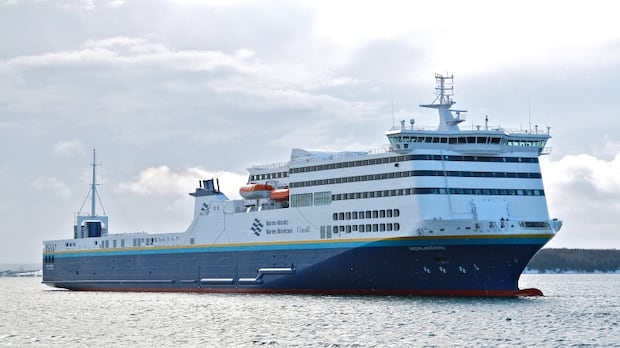
Port of Argentia in Newfoundland has become a significant tourist destination, experiencing a surge in Marine Atlantic ferry reservations. However, the possibility of an impending strike is raising concerns about the terminal’s operations going silent.
Unifor, the union that represents 700 employees of Marine Atlantic, has suggested eliminating the ferry route between Argentia and North Sydney, Nova Scotia, should a strike or lockout occur.
Mayor Jamie Neville of Placentia described this development as a “bombshell,” emphasizing that numerous local businesses depend heavily on the influx of travelers.
“That’s our lifeline,” Neville stated. “If these individuals do not make the most of this season, many of them may not survive the winter.”

Placentia Mayor Jamie Neville emphasizes the importance of the Argentia ferry route as a ‘lifeline.’ (Danny Arsenault/CBC)
In addition to economic impacts, Neville noted that many elderly individuals and those with disabilities favor the Argentia ferry over the Port aux Basques route located on the west coast of Newfoundland.
Residents of Placentia also rely on the ferry for the delivery of food, medication, and other vital supplies.
“It impacts everything… We need this essential service to operate uninterrupted,” Neville remarked.
On Tuesday, Tony Wakeham, the Premier of Newfoundland and Labrador, informed CBC News that he has reached out to the federal government, urging that Marine Atlantic be maintained as an essential service, asserting that Ottawa has a “constitutional responsibility.”
“It serves as our primary method of transporting crucial supplies, goods, and people,” Wakeham stated during an interview on CBC Radio’s On The Go.
He emphasized the crucial role Marine Atlantic plays in the everyday life of residents in Newfoundland and Labrador.
“That’s why it was classified as an essential service, and I firmly believe it must retain that status.”
Upcoming busy season
The anxiety surrounding the situation is being felt even over 800 kilometers away on the west coast of Newfoundland, where Unifor has also suggested reducing the Port aux Basques route from three daily crossings to just three per week to North Sydney.
Richard Spencer, Deputy Mayor of Channel-Port aux Basques, indicated that many families’ income sources are closely tied to the Marine Atlantic ferry service, which is a major employer in the area, benefiting local businesses through its daily operations.
“When we discuss Marine Atlantic, we’re discussing more than just ferries; it’s a crucial component of our local economy,” Spencer commented.
-
Possibility of Marine Atlantic strike sends ‘shockwaves’ throughout N.L.’s industry associations
-
Booked and busy: Marine Atlantic expects a busy tourism season for province
Should the employees of the Crown corporation initiate a strike this summer, Spencer warned that the disruption in services could mirror the effects of previous strikes at Canada Post.
He added that cutting the number of ferry crossings would severely impact the summer business season for his community.
“We are approaching one of the peak tourism times of the year,” Spencer stated. “A dependable ferry service is vital for visitor traffic, local enterprises, accommodations, restaurants, and even province-wide logistics.”
Strike threat causes ‘mental distress,’ says former politician
Unifor has recently requested the Canadian Industrial Relations Board to reassess Marine Atlantic’s designation as an essential service, which was established in 2003.
Gerry Byrne, a former federal and provincial politician, recalled the day the service was classified as essential.
“The looming threat of a strike caused significant mental distress among Newfoundlanders and Labradorians,” Byrne remarked. “I am certain that the same sentiments and realities that prompted this back in the early 2000s are even more pronounced today.”

Former N.L. politician Gerry Byrne advocated for a second Marine Atlantic subsidy. (CBC)
Byrne asserted that Marine Atlantic workers are entitled to fair compensation and expressed hope that this can be achieved through collective negotiations.
He also mentioned that this situation might have been prevented if Newfoundland and Labrador had received a commercial subsidy, similar to other Atlantic provinces, in addition to the 50 percent reduction on Marine Atlantic’s passenger fares.
“With that subsidy, half of any wage increase granted to employees would be counterbalanced by a second federal subsidy program, facilitating reasonable wage increases for Marine Atlantic workers,” Byrne explained.
This is something he championed during his tenure in Ottawa but ultimately did not come to fruition.
According to Unifor, the conciliation process between the union and Marine Atlantic concludes next week following a breakdown in mediated discussions.
Post June 8, there will be a 21-day “cooling-off period” before any legal labor disruption can take place.
Download our free CBC News app to subscribe to push alerts for CBC Newfoundland and Labrador. You can also sign up for our daily headlines newsletter here. Click here to visit our landing page.