
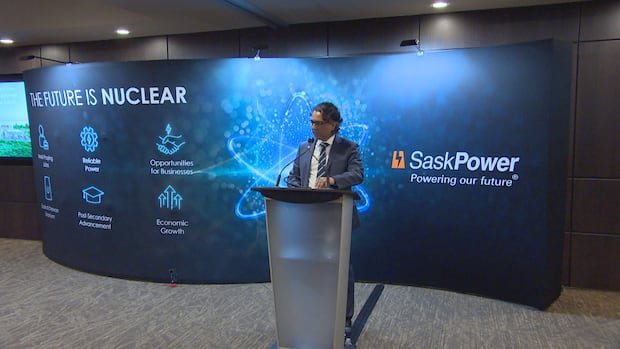
The provincial government of Saskatchewan, in collaboration with SaskPower, has pledged to explore options for establishing a significant nuclear reactor within the province. While proponents argue that a nuclear reactor could boost the economy, critics highlight concerns about financial implications and environmental impacts that should be carefully considered. Here is an overview of the key aspects surrounding this issue.
Nuclear reactors serve as the core components of nuclear power plants, controlling nuclear chain reactions that generate heat through fission. This heat is then converted into electricity by powering turbines with steam. The proposed reactors would be fueled by uranium extracted from Saskatchewan, with the capability to produce substantial amounts of electricity, particularly from a large-scale source, sparking discussions about Saskatchewan’s role in the future of nuclear energy.
Supporters emphasize the potential economic benefits of nuclear power, citing job creation opportunities and the possibility of exporting energy across provincial borders. Jeter Hall, the director of the Sylvia Fedoruk Canadian Centre for Nuclear Energy, highlighted the prospect of sharing power with neighboring Alberta, stressing the need for new transmission infrastructure to facilitate cross-border electricity transfer. Despite the focus on large reactors, the province remains committed to developing small modular reactors (SMRs).
Advocates of large reactors argue that they offer cost-efficiency compared to multiple SMRs, with proven technologies deployed globally. Canada could establish itself as a leader in nuclear energy utilization, with Saskatchewan potentially hosting some of the first modular reactors in the country following Ontario’s lead.
Conversely, critics caution that a large reactor could impose a significant financial burden on Saskatchewan taxpayers. Peter Prebble of the Saskatchewan Environmental Society raised concerns about the high costs associated with large-scale nuclear projects, pointing to massive expenditures on similar initiatives in the United States. He advocated for alternative energy sources like solar and wind power, emphasizing their affordability and environmental friendliness.
Past proposals for nuclear reactors in Saskatchewan have faced challenges, mainly due to cost considerations and environmental worries related to radioactive waste. Despite previous setbacks, proponents believe the Lake Diefenbaker region remains a viable location for a potential large-scale reactor due to its abundant water supply necessary for cooling purposes. However, concerns persist regarding water contamination risks and potential health implications for workers and nearby residents in case of accidents.
As of now, the Saskatchewan government has not disclosed specific details regarding the site selection or funding projections for a large nuclear reactor, while Estevan has been earmarked as a probable location for a small modular reactor. The debate surrounding the establishment of nuclear power generation in Saskatchewan continues, with stakeholders weighing the economic, environmental, and societal implications of such a significant energy project.