
Over the weekend, Secretary of State Marco Rubio addressed inquiries regarding the potential U.S. government involvement in governing Venezuela post the apprehension of President Nicolás Maduro. Instead of discussing the governance takeover, Rubio emphasized the enforcement of a U.S. blockade on sanctioned oil tankers as a leverage point for policy changes in Venezuela. This measure, announced by President Donald Trump in December, is intended to influence policy adjustments in Venezuela, as highlighted by Rubio during an appearance on CBS News’ Face the Nation.
The blockade was officially declared by Trump through a social media post on Truth Social, where he stated that Venezuela was encircled by a significant armada, leading to the implementation of a complete blockade on all sanctioned oil tankers entering or leaving Venezuela. This action was a response to the regime’s classification as a “foreign terrorist organization” due to various offenses, including the misappropriation of U.S. assets, terrorism, drug trafficking, and human trafficking. The sanctioned vessels, listed by the U.S. Treasury Department, were reported to exceed 30 in number at the time of the announcement.
The sanctioned vessels, part of an illicit “shadow fleet” involved in transporting crude oil into global supply chains, employ tactics such as altering their identification systems to conceal their movements. This clandestine operation is utilized by Maduro’s regime to engage in illicit activities and evade sanctions, as confirmed by the U.S. Treasury Department.
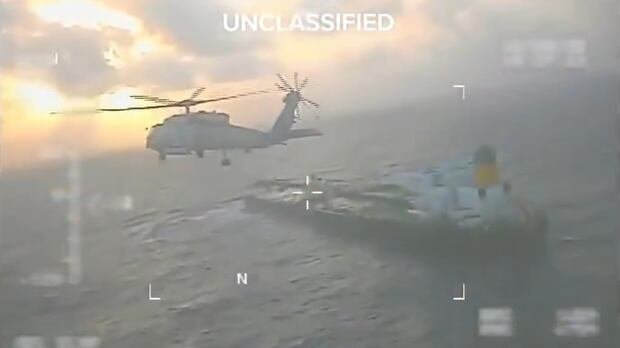
Contrary to the term “blockade” used by Trump, officials like Rubio refer to the action as a “quarantine” targeting illegal activities, a distinction that avoids the implications of an all-encompassing wartime blockade. The legality of the quarantine allows for the search and seizure of vessels not adhering to flag regulations, as explained by legal experts.
Although only two vessels have been intercepted thus far, the enforcement of the blockade is ongoing, with plans to intercept additional sanctioned vessels. Despite efforts to evade the blockade, some vessels have managed to circumvent the restrictions, raising concerns about the efficacy of the enforcement measures.
The blockade’s impact on Venezuela’s economy is substantial, particularly on its oil exports, which serve as a primary revenue source. With the state-owned oil company PDVSA facing production constraints due to the blockade, the country’s oil production may see a significant decline, potentially affecting over 70% of production if the blockade persists.