
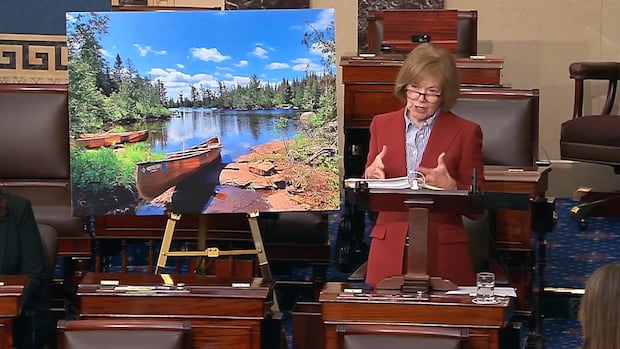
Congressional Republicans have passed a resolution to lift the federal ban on mining near the Boundary Waters Canoe Area Wilderness in Minnesota, aiming to allow a South American company to extract valuable metals from the area’s untouched forests and lakes. Despite warnings from conservationists about potential pollution in one of the country’s last remaining wild areas, the House and Senate approved the resolution, sending it to President Donald Trump for final approval.
Democrats in the Senate raised concerns about setting a dangerous precedent that could lead to the removal of protections on public lands nationwide. Minnesota Senators Amy Klobuchar and Tina Smith criticized Republicans for jeopardizing their state’s heritage by supporting the resolution.
The Boundary Waters Canoe Area Wilderness spans approximately 240 kilometers in the Superior National Forest along the Minnesota-Canada border, offering serene landscapes of lakes, forests, and starlit nights. The region prohibits logging, restricts aircraft altitude over the area, and limits motorized watercraft access to specific zones, attracting thousands of outdoor enthusiasts yearly.
Twin Metals Minnesota LLC, a subsidiary of Antofagasta Minerals based in Chile, aims to mine copper, nickel, and other metals in the national forest. The company’s plan promises job creation and economic benefits for northeastern Minnesota communities. Despite opposition and legal challenges, the Trump administration has supported the company’s mining efforts, emphasizing the need for domestic mineral production.
The decision to lift the ban has sparked backlash from environmentalists and outdoor advocates who fear pollution from mining activities could harm the watershed and ecosystems, affecting wildlife and tribal cultures. The debate over mining in the area has become a contentious issue between state and federal authorities, with ongoing legal battles and public demonstrations against the resolution.
While the resolution’s approval seems likely, the actual commencement of mining operations could face significant delays due to regulatory hurdles and potential legal challenges. Even if Trump signs the resolution, the process of obtaining permits and approvals from various agencies and potential lawsuits from environmental groups could prolong the timeline for the mine’s development.