
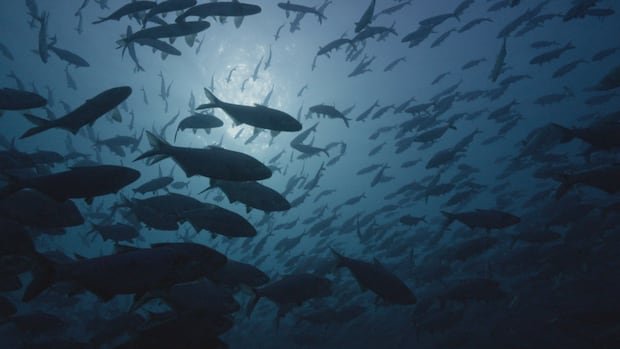
In Lake Huron, fish are congregating in large numbers near an Ontario nuclear plant, creating a stunning sight captured in exceptional detail. Filmmakers Yvonne Drebert and Zack Melnick are using an advanced underwater drone worth $250,000, one of only about 10 globally and the sole freshwater-operating unit, to film parts of the Great Lakes that are typically inaccessible due to depth or remoteness.
CBC News has been granted exclusive access to footage from a dive showcasing this phenomenon, as a lead-up to an Earth Day livestream event promoting their upcoming documentary series, “Hidden Below: the Great Lakes.” The documentary focuses on rare wildlife in the largest freshwater ecosystem on Earth.
The drone is specifically concentrating on the warm water discharge from Bruce Nuclear Generating Station near Tiverton, Ont., which serves as a sanctuary and feeding area for a variety of fish species. Dubbed “fish city” by the filmmakers, this location attracts numerous fish due to its elevated temperature, with cinematic 4K footage showing gizzard shad shimmering in the sunlight alongside other species like bigmouth buffalo, walleye, and trout.
Experts highlight how the warmer water in the plume facilitates abundant food for the fish, leading to increased nutrient cycling and algae growth. However, the concentration of fish in these thermal plumes may indicate a fundamental shift in the ecosystem caused by invasive mussel species that have depleted food levels, altering the natural balance.
While thermal plumes are common in the Great Lakes and are primarily associated with power plant cooling systems, they can lead to ecological changes that impact native fish populations. The warmer conditions resulting from these plumes can also provide a foothold for invasive species in northern ecosystems, affecting local communities reliant on fisheries like the Saugeen Ojibway Nation.
As such, the unique sight of the “fish city” raises concerns about the environmental impact of warm water discharges from industrial sources and the implications for the delicate balance of the Great Lakes ecosystem. Researchers emphasize the importance of safeguarding this vital resource, which supports various industries and sustains millions of people in the region.