
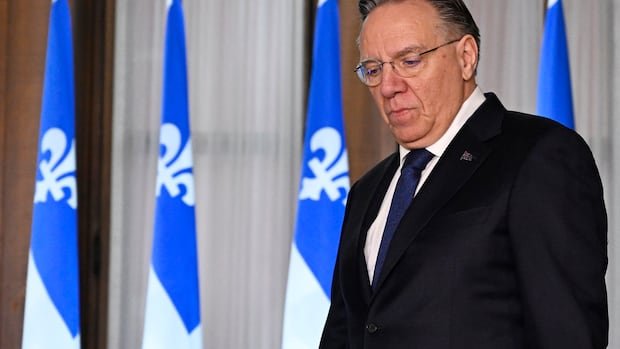
Quebec’s political scene is undergoing changes with Premier François Legault’s unexpected resignation last week after over seven years in charge. Legault, the founder of the Coalition Avenir Québec (CAQ) in 2011 and the leader who secured two majority victories in 2018 and 2022, cited declining public support and a call for change among Quebec residents as reasons for his decision to step down. He will continue in his role until the CAQ selects a new leader, with the next provincial election set for October 5.
Recent surveys indicate that the Parti Québécois (PQ) is currently leading, proposing a sovereignty referendum during its upcoming term, while both the CAQ and the Quebec Liberal Party (PLQ) are facing leadership changes amid internal challenges. Despite being in the process of choosing a new leader, the Quebec Liberals are polling higher than the CAQ.
Québec Solidaire (QS) is struggling in the polls with co-spokespeople Ruba Ghazal and Sol Zanetti at the forefront. The PQ, led by Paul St-Pierre Plamondon, views Legault’s departure as an opportunity for governmental change and an independent Quebec. The PQ has increased its seats to six from three in 2022 after winning three consecutive byelections in Jean-Talon, Terrebonne, and Arthabaska.
Support for independence stands at around 35%, with a notable surge in support among younger Quebecers. St-Pierre Plamondon criticizes Legault’s approach of prioritizing Quebec’s interests without pushing for independence, advocating for a spring election instead of waiting until fall.
The latest Pallas Data poll shows Legault and the CAQ with only 10% of voting intentions, reflecting a steady decline in support due to recent controversies such as the SAAQclic fiasco and the Northvolt deal. The CAQ, which won 90 out of 125 National Assembly seats in 2022, now holds 79 seats and is gearing up for a leadership change in mid-April 2026.
The PLQ is amidst a leadership race following Pablo Rodriguez’s resignation in December amid allegations of a pay-for-votes scandal and several caucus expulsions. Marc Tanguay is serving as the interim leader. The QS party, with 11 seats, is facing a decline in polls, with expectations of losing seats in the upcoming election. Ghazal and Zanetti took over in November 2024, focusing on feminism, independence, environmentalism, and workers’ rights.