
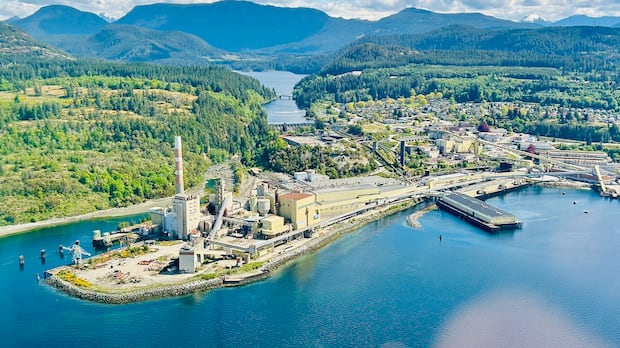
On Monday, a unique federal hearing will commence in Powell River, B.C., to review an independent energy producer’s bid to export electricity, with numerous local participants expected to contribute.
This week-long session aims to assess the request made by Powell River Energy Inc. (PREI) to the Canada Energy Regulator (CER) for a 30-year permit to export electricity generated at a dam close to an old forestry mill to the United States.
The City of Powell River, the Tla’amin First Nation, B.C. Hydro, and a citizens’ advocacy organization known as Energy Democracy B.C. have been approved as intervenors in the hearing.
They argue that the electricity generated in the area should remain local to foster industrial growth and bolster the regional economy.
“This hearing is of great significance for our community, particularly following the closure of our mill a few years ago, which led to job losses and a diminished tax base,” remarked newly-elected Powell River Mayor Jim Palm.
“Retaining that power for the redevelopment of the [mill] site, the creation of jobs, and the stabilization of our tax base is crucial.”
The CER, an independent federal body overseeing electricity exports from Canada and operating under Natural Resources Canada, stated that this is the first instance of such a hearing regarding electricity export.
Revitalizing the old mill site
The hydroelectric dams in Powell River were constructed in 1911 to supply power to a paper mill that was vital to the local economy until 2021, when Catalyst Paper halted operations indefinitely.
As per the B.C. Utilities Commission, PREI has been providing surplus electricity to the wholesale market since 2001. PREI operates as a subsidiary of Brookfield Renewable Partners L.P.
Following the mill’s closure, it redirected all its electricity to the U.S. through a network of affiliated companies using the B.C. Hydro transmission system.
In 2025, PREI submitted a request for a 30-year contract-based electricity export permit.
In the same year, the Tla’amin First Nation reacquired a portion of the site. The nation asserts that the mill and its surroundings, referred to as tiskʷat, were part of its ancestral village.
Another section of the mill was sold to Cranberry Business Park, which is still leasing the land from Domtar, the owner of Catalyst Paper, as it facilitates the site’s decommissioning.
Cranberry CEO Craig Austin indicated he would be closely monitoring the hearings.
“This is significant for all parties involved,” Austin stated.
“The demand for power in Powell River is currently at a minimum, but it will definitely be required.”

Powell River, B.C., is a city of about 15,000 residents located on B.C.’s upper Sunshine Coast. (Government of B.C.)
Austin expressed understanding for PREI’s current situation, as they have no destination for the electricity they are generating now. However, he feels optimistic that businesses in need of power will emerge in the future.
He added that the Cranberry Business Group has received substantial interest from various companies looking to lease space.
The Tla’amin Nation announced plans to manage a portion of the land with a focus on cultural and environmental priorities, while also intending to develop some areas for industrial purposes.
Tla’amin Hegus (Chief) John Hackett noted that the proposed export agreement with PREI is at odds with a memorandum of understanding signed by the nation and PREI, which included provisions for local power access.
$10M contribution to the community
PREI has chosen not to comment during this period to honor the CER hearing process.
According to its website, the company has been exporting power to the U.S. for over two decades.
It states that its request for the license is due to the limitations imposed by provincial regulations that prevent direct sales of electricity to consumers within B.C.
“Sales of energy in the export market will provide PREI with the stable revenue necessary to maintain the long-term sustainability of its hydroelectric facilities. This will contribute to preserving local jobs and supporting ongoing investments in the community,” the company asserts on its website.
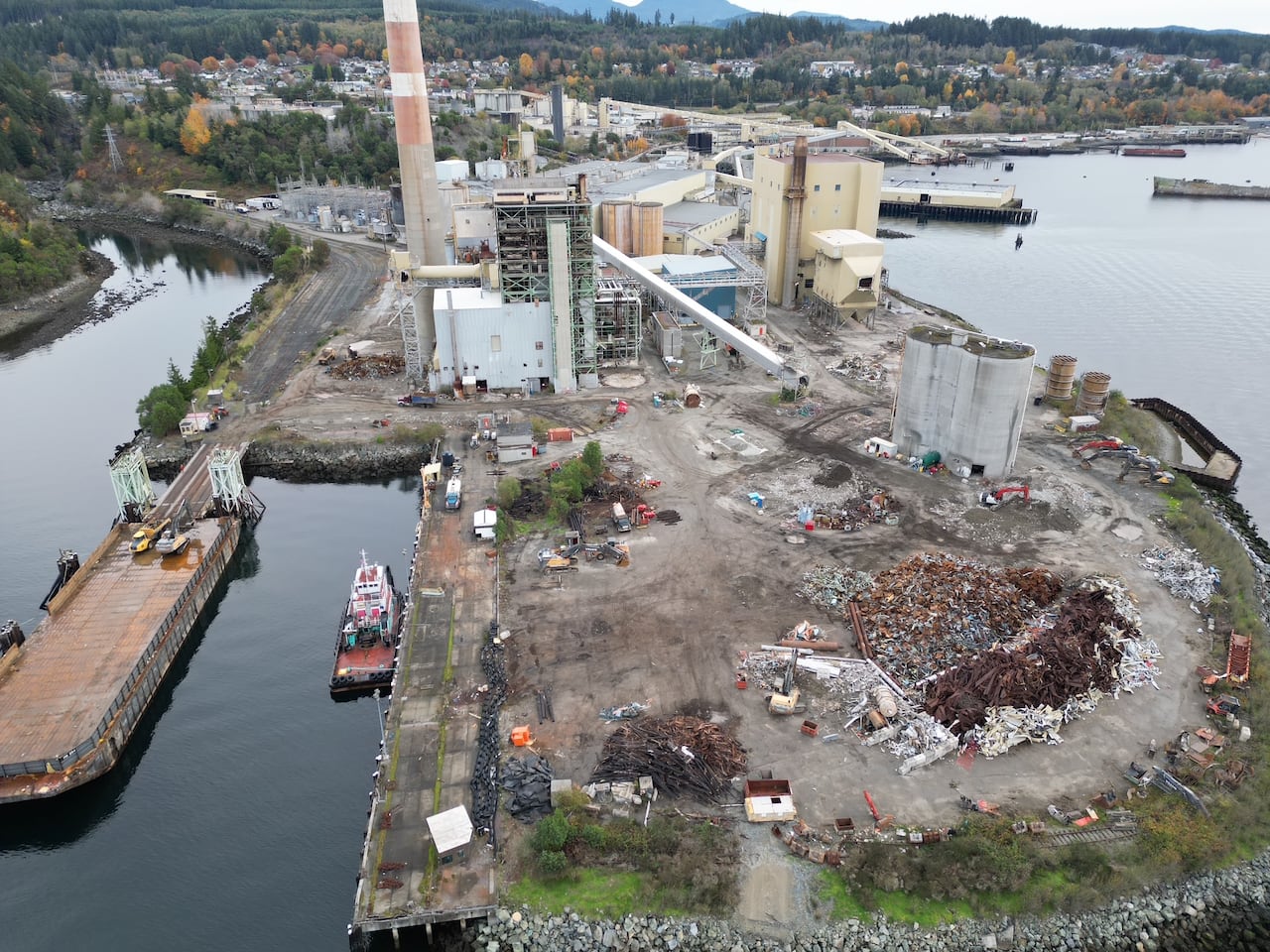
The decommissioning of the former mill in Powell River, B.C., is paving the way for a new business park. (Submitted by Cranberry Business Group)
The company reports that it contributes about $10 million per year to the region, with half of that amount generated through taxes, water usage royalties, and other governmental charges.
PREI also indicates that it is standard practice for Canadian energy producers to obtain export licenses.