
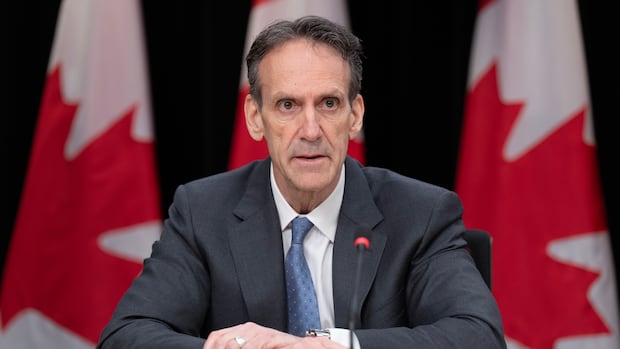
As U.S. officials assert that their efforts to combat drug trafficking at the Mexico border are resulting in increased criminal activity stemming from Canada, fentanyl czar Kevin Brosseau is countering this claim, stating that the statistics “really haven’t supported that.”
In a discussion with CBC’s The House, Brosseau highlighted recent figures from the U.S. Customs and Border Protection, indicating that less than 0.5 kilograms of fentanyl were confiscated at the Canada-U.S. border in May, in stark contrast to the 358 kilograms seized at the Mexico-U.S. border.
Thus far this year, U.S. officials have intercepted around three kilograms of fentanyl at the Canadian border, while approximately 3,221 kilograms have been seized at the Mexican border.
Brosseau recognized the capability of organized crime to adapt its operations, expressing concern that “we cannot afford to ease our efforts.”
“We must continue this work and maintain vigilant oversight across Canada, especially at ports and the border, to ensure that these cartels are not shifting their activities from Mexico to Canada,” Brosseau stated.
However, despite Canada’s initiatives and the official statistics, it seems American authorities are not being swayed, at least not publicly.
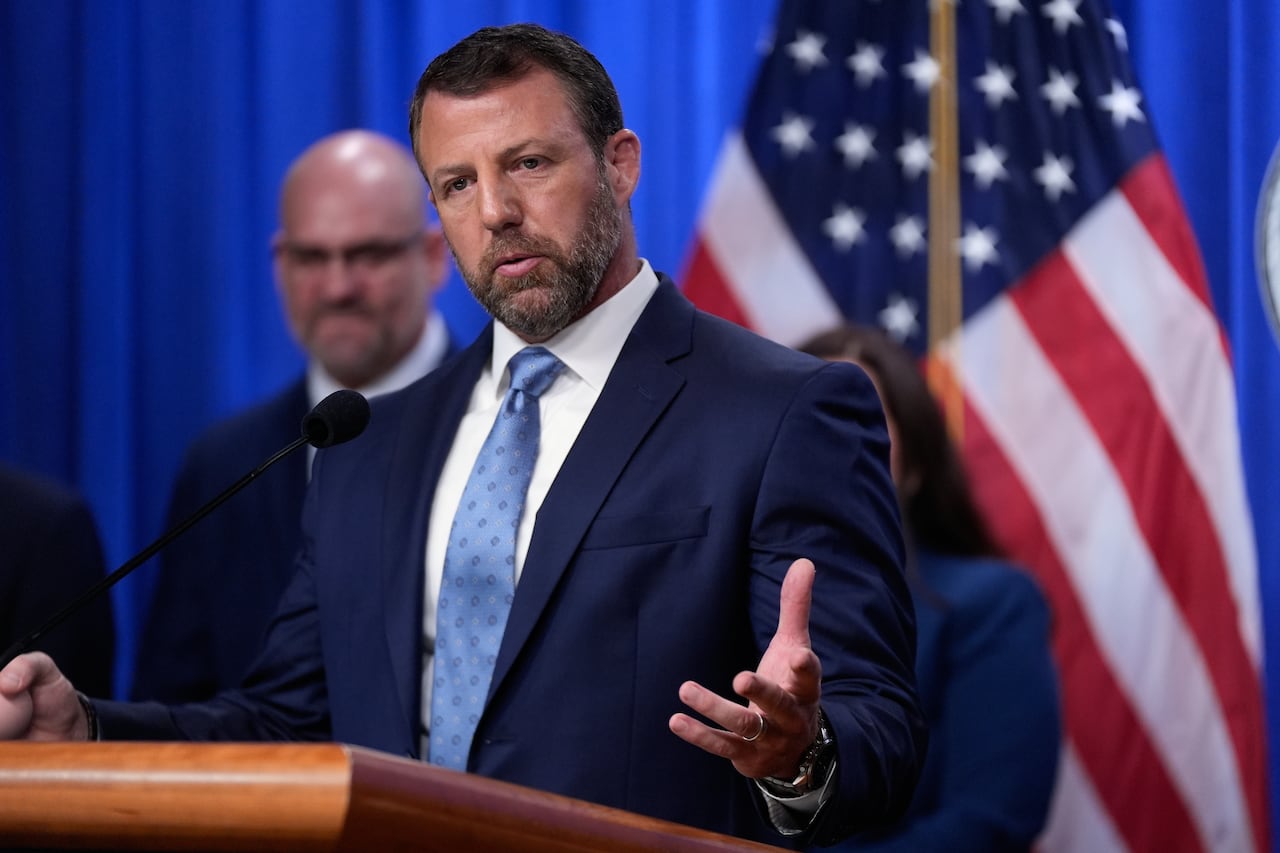
U.S. Homeland Security Secretary Markwayne Mullin stated this week that there is an increase in fentanyl entering the U.S. from Canada, which contradicts the latest data from U.S. border officials (Manuel Balce Ceneta/The Associated Press)
Earlier this week in Washington, Markwayne Mullin, the U.S. Secretary of Homeland Security, remarked that law enforcement has observed a rise in fentanyl trafficking from Canada, a trend he credits to U.S. actions against Mexican cartels.
Mullin emphasized that the cartels “do not simply disappear. Their business models remain intact. The demand persists, prompting them to explore new avenues.”
Mullin reported that authorities apprehend individuals on the terrorist watchlist “almost weekly” at the northern border.
He noted that over the past year, law enforcement has seen “significantly increased” drug trafficking from Canada, especially fentanyl.
Concerns regarding border security have been a major point of contention for the Trump administration in its relationship with Canada.
Brosseau mentioned that he has held constructive discussions with U.S. officials, who are “very eager to hear directly from me regarding Canada’s actions. They are observing the outcomes and are clearly paying close attention to our efforts.”

Prime Minister Mark Carney states he had ‘numerous discussions’ with U.S. President Donald Trump about the Canada-U.S. trade agreement during the G7 summit. ‘It is well-known that the president has not been the biggest supporter of CUSMA in recent years,’ Carney noted, though he emphasized that there are specific trade matters the two nations ‘can collaboratively address.’
When inquired if the White House is receptive to Canada’s concerns following a series of exchanges, Brosseau expressed that he believes there should be no fentanyl entering the Canada-U.S. border.
“There should be none in our communities, as it is claiming lives every day and tearing families apart. That is the message and the drive I bring to this issue, which I aim to convey to all stakeholders involved,” Brosseau articulated.
The fentanyl czar also mentioned he is uncertain whether fentanyl has become a contentious issue during the ongoing evaluation of the Canada-U.S.-Mexico Agreement, stressing the importance of tackling fentanyl regardless of its impact on trade negotiations.
Opioid fatalities decreased last year
Earlier this week, Canadian health officials conveyed “cautious optimism” regarding recent statistics indicating a 23 percent drop in opioid overdose deaths from 2024.
Officials attributed this reduction to various factors, including changes in the illegal drug market and increased access to naloxone, a medication that counteracts the effects of an opioid overdose.
In the previous year, 5,630 individuals lost their lives due to opioid overdoses in Canada.
Data also reveals that in 2025, the Canada Border Services Agency intercepted 2.8 kilograms of fentanyl, marking a 43 percent decrease from the 4.9 kilograms seized in 2024.
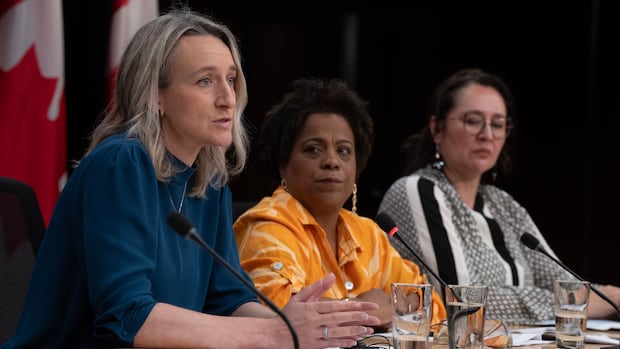
Canada’s Chief Public Health Officer Dr. Joss Reimer emphasizes that further reductions in overdose deaths will require coordinated efforts, especially as emergency medical services respond to ‘polysubstance overdoses’ that necessitate more intricate interventions.
Brosseau stated that establishing a direct causal relationship between specific initiatives and outcomes is challenging, yet he acknowledged that the drug trade functions as an ecosystem with “clear supply and demand aspects” that can be disrupted by efforts to eliminate supply or educate the public on associated risks.
“Considerable work has been accomplished, and for me, the major challenge lies in uniting the various components of the ecosystem,” he remarked.
Regarding the current situation, Brosseau expressed a sense of cautious optimism as he continues to intensify efforts against fentanyl.
“We have a long journey ahead, but we have also been working on this for quite some time,” Brosseau concluded.