
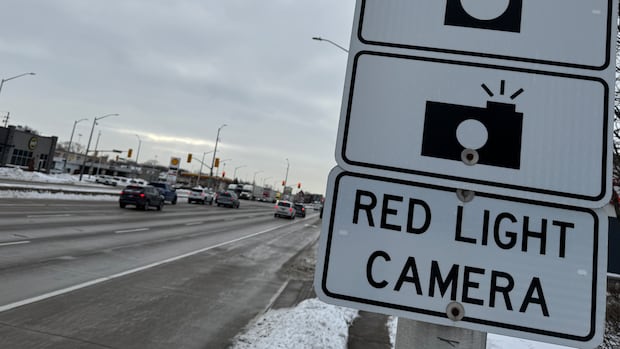
Red-light cameras operating in Ontario have been capturing civilians for a considerable period, but certain police officers racing to emergencies claim they are unjustly facing penalties due to the same technology.
The union representing around 500 officers in Windsor revealed that whenever one of its members receives a red-light camera ticket, the service deducts six hours of pay for the initial violation. If a second offense occurs, the officer loses 12 hours of pay.
Kent Rice, the president of the Windsor Police Association, expressed concern, stating, “You’re working a day and a half for free.” Rice emphasized that officers are extensively trained and possess the discretion to perform their duties, which should not be hindered when approaching an intersection with a red light.
Rice highlighted the importance of balancing public safety and officer discretion, arguing that the legislation was never intended to penalize officers for necessary actions in emergency situations. He emphasized that officers should be allowed to exercise judgment based on the urgency of the call, time of day, and specific intersection conditions.
One officer, whose identity remains confidential due to fears of reprisal, recounted an incident where their pay was docked after being captured by a red-light camera while responding to a Priority 1 call. The officer stressed the frustration of being penalized for fulfilling their duty to apprehend a suspect.
In contrast to Windsor, Essex-Windsor EMS paramedics under the County of Essex face potential discipline for red-light camera infractions, while Windsor firefighters are personally responsible for paying any tickets incurred. The City of Windsor clarified that first responders, if visibly responding to an emergency, are not ticketed by red-light cameras.
London, akin to Windsor, also faces issues with automatic pay deductions for red-light camera violations among police officers. London Police Association president Gareth Harris advocated for a more nuanced approach, considering the circumstances of each incident to determine if discipline is warranted.
The provincial government was questioned about the intended use of red-light camera technology to discipline first responders, with the Ministry of the Solicitor General redirecting inquiries to the organizations directly involved in disciplinary practices.
Overall, the debate surrounding the treatment of officers caught by red-light cameras while responding to emergencies continues, with calls for a more nuanced approach to prevent unjust penalties.