
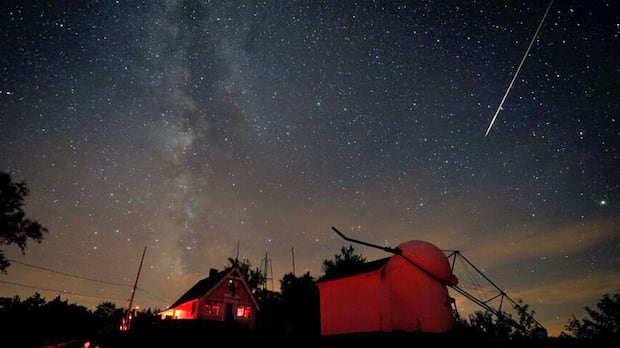
The annual Perseid meteor shower, known for its abundance and brightness, is set to coincide this year with a partial solar eclipse on its peak day. The shower, considered one of the most spectacular events of the year, is anticipated to offer a dazzling display of meteors under favorable viewing conditions. Scheduled to peak on the night of August 12-13, the event aligns with a new moon phase, promising an unobstructed view of the meteor shower.
Peter Brown, a renowned expert in Meteor Astronomy from Western University, expects a significant presence of Earth-grazers during this year’s Perseid meteor shower. These fast and bright meteors provide a captivating sight as they traverse the night sky. The peak viewing time is estimated to be around midnight Eastern Daylight Time, with a potential of up to 120 meteors visible per hour, although actual visibility may vary based on local conditions.
Enthusiasts are encouraged to venture out early for optimal viewing opportunities, with the shower already underway since July 17 and meteor sightings progressively increasing leading up to the peak night. Observers are advised to check weather forecasts and choose dark-sky locations for the best experience. Additionally, minimizing light pollution, such as from mobile phones, is crucial for optimal visibility of the shower.
Aside from the Perseids, two other prominent meteor showers, the southern delta Aquariids and the alpha Capricornids, are currently active, offering additional chances to witness shooting stars. The forthcoming partial solar eclipse on August 12 will not be fully visible from Canada, but viewers may still catch a glimpse of the moon partially obscuring the sun, particularly in regions further east.
To safely observe the partial solar eclipse, spectators are reminded to use approved solar eclipse glasses to protect their eyes. This celestial event presents an awe-inspiring opportunity to witness the intricate dance of the Earth, moon, and sun in motion, providing a humbling experience for sky gazers.