
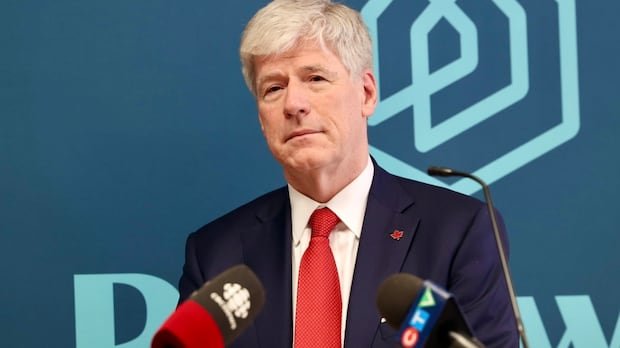
The Nova Scotia Premier, Tim Houston, has put forward an ambitious offshore wind energy plan that has caught the attention of the federal government. Despite the interest shown by Ottawa, the project will not be deemed a national interest endeavor until private sector partners come on board. Federal Energy and Natural Resources Minister, Tim Hodgson, highlighted the need for the involvement of industry players for the project to transition from a strategic vision to an actionable initiative.
Houston’s proposal, known as Wind West, envisions a substantial expansion of offshore wind projects along with the establishment of a transmission line to facilitate energy export. The estimated cost for the project includes $40 billion for five gigawatts of turbines and $20 billion for transmission cables. The Premier is seeking support from Ottawa in the form of tax credits, low-interest financing, and direct investment to materialize the endeavor.
Although Prime Minister Mark Carney has hinted at the potential inclusion of Wind West in major projects, further work is required before receiving final approval. The project faces a complex situation where different stakeholders are awaiting commitments from each other. The Canada-Nova Scotia Offshore Energy Regulator has initiated a pre-qualification process for potential developers and is expected to launch a bid call this year.
French company Q Energy has expressed interest in building in Nova Scotia waters but emphasizes the importance of having transmission infrastructure in place before significant investments. Houston remains optimistic about private sector interest in the project, citing a high response rate to the pre-qualification call by the regulator. He emphasized that the project is poised to move forward given the substantial interest it has generated.
The federal government, through Natural Resources Canada, is contributing nearly $5 million to Net Zero Atlantic for a feasibility study on Wind West. Houston views this funding as a significant milestone, addressing the key challenge of power distribution and transmission. Additionally, a recent legislative bill introduced by Houston outlines a revenue model for offshore wind projects, proposing a four percent royalty on gross revenue after a decade of operation to attract developers without imposing high fees initially.
The ongoing developments surrounding Wind West underscore the intricate dynamics involving public and private sector collaboration. With substantial interest and investments in the pipeline, the project holds promise for Nova Scotia’s renewable energy landscape.