
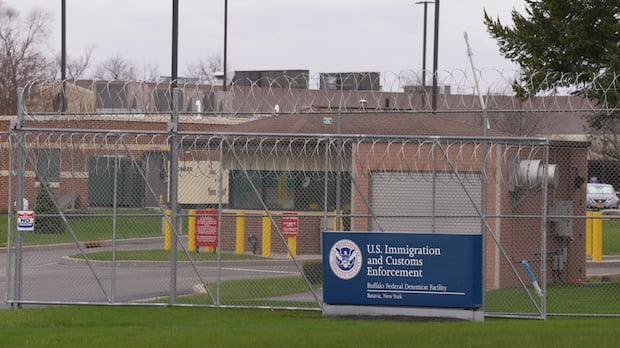
Last week, a second Native American-owned company announced the termination of a multi-million dollar contract with the United States Immigration and Customs Enforcement (ICE) following community pressure. A division of Oneida ESC Group, owned by the Oneida Nation of Wisconsin, canceled a $3.8 million contract with ICE for engineering and inspection of federal facilities after the Oneida government denounced the agreement. The subsidiary’s board of managers was also replaced by the Oneida government.
Chairman Tahassi Hill of the Oneida Nation of Wisconsin emphasized the importance of each nation having the authority to uphold its own principles and values. He stated that immediate action must be taken when faced with issues conflicting with laws, policies, and core values.
In a similar move, the Prairie Band Potawatomi Nation in Kansas recently terminated a $29.9 million contract with ICE for planning, research, and concept designs for secure structures. The tribal chairman, Joseph “Zeke” Rupnick, highlighted the historical context of Indian reservations being used as detention centers and stressed the need to avoid participating in activities that perpetuate past harm and trauma.
Becky Webster, a member of the Oneida Nation of Wisconsin and former senior staff attorney for the tribe, expressed surprise upon learning about the ICE contract, stating that it contradicted the values cherished by their community. She explained that tribal corporations operate independently to explore various economic opportunities and shield the nation from certain legal responsibilities.
Matthew L. M. Fletcher, a law professor and member of the Grand Traverse Band of Ottawa and Chippewa Indians, discussed the affirmative action programs supporting minority-owned businesses, including Indigenous enterprises eligible for contracting preferences under the federal 8(a) program. These initiatives aim to provide opportunities for historically disadvantaged groups, such as tribes and Alaska Native corporations.
Fletcher highlighted the attractiveness of such contracts to tribes due to their legal standing, exempting them from certain regulations applicable to public corporations. He noted that tribes are not required to disclose as much information publicly and can disregard requests for information concerning national security matters.
Akima, a business entity under NANA Regional Corporation owned by 11 Iñupiaq villages in Northwest Alaska, holds substantial contracts with the Department of Homeland Security and ICE, including services at the Guantanamo Bay naval base. The corporations emphasized their commitment to ethical operations aligned with their cultural values, despite limited public disclosures regarding specific contracts.
Winona LaDuke, an environmentalist from White Earth Reservation in Minnesota, drew parallels between past instances of tribes engaging in controversial ventures for financial gain and the current situation with Indigenous corporations involved in government contracts. She warned against the colonization process of turning Indigenous communities into profit-driven entities, urging tribes to scrutinize their business dealings to prevent compromising their values and integrity.
In conclusion, Indigenous nations like the Prairie Band Potawatomi Nation and Oneida Nation of Wisconsin are urged to prioritize ethical business practices and community values to avoid engaging in ventures that conflict with their cultural heritage and principles.