
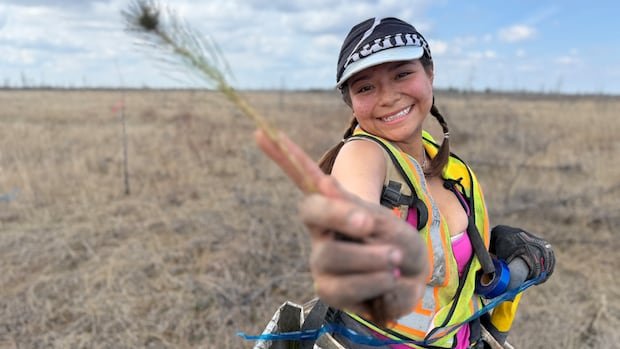
Marley Moose, 22, is currently dedicating her third summer to reforesting areas in northern Manitoba that have been devastated by wildfires. Despite her efforts, the task has become more difficult due to the discontinuation of a government initiative aiming to plant two billion trees by 2030.
The forest in Manitoba’s Interlake region, previously hit by a jack pine budworm infestation in 2016 and later burned by wildfires in 2021, is in need of regeneration. Marley, participating in a tree-planting program through Nekoté LP, an Indigenous-owned corporation representing seven Swampy Cree First Nations, expressed her commitment to restoring life to the scorched land.
The Canadian Tree Nursery Association (CTNA) reports that Canada is losing trees at an alarming rate, with deforestation for various purposes and wildfires being significant contributors. The cancellation of the 2 Billion Trees Program, an initiative introduced by former Prime Minister Justin Trudeau in 2019, has left reforestation efforts, like the one led by Nekoté LP, at risk.
The CTNA emphasizes the urgency of replanting trees, especially in the face of recurring wildfires and the escalating carbon emissions from forest degradation. The cancellation of the program has prompted collaborative efforts among stakeholders to seek alternative funding and solutions to address the pressing need for reforestation.
Farron Sharp, a project manager with Blue-Green Planet Project, is actively seeking new funding sources to support tree-planting initiatives in Manitoba. Partnering with organizations like Canadian Kraft Paper, the project aims to plant 20 million trees by 2030, contributing to sustainability and environmental restoration efforts.
Despite the challenges, Marley and her team continue to laboriously plant trees, driven by the hope of creating a healthier environment for future generations to enjoy. Their dedication reflects a commitment to preserving and restoring the natural landscapes that have been impacted by human activities and climate change.