
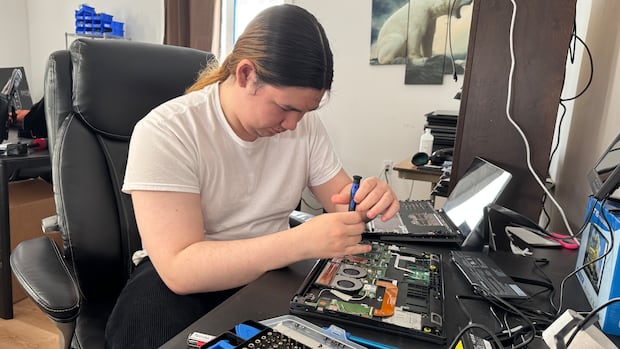
In a busy office setting, Joseph Kanayuk-Driscoll is seen using a screwdriver to disassemble a laptop. This is just one of many laptops he has worked on this week as a computer refurbisher at the Ampere office in Iqaluit. He is part of a program that refurbishes old donated laptops to distribute to students and residents across Nunavut, aiming to reduce e-waste in Iqaluit’s landfills.
According to a recent University of Waterloo study, Canadian e-waste has tripled since 2000, showing a significant increase in electronic waste generation. In Iqaluit, Kanayuk-Driscoll remarks on the rise in donated laptops being refurbished through the program rather than being discarded.
Bryce So, another refurbisher in the program, estimates that Iqaluit produces around 200 pounds of e-waste annually. He notes a substantial increase in the number of laptops refurbished, from 100 devices per year to over 1,000 devices currently. So mentions the challenges of managing the growing inventory, highlighting the need for meticulous sorting and organization.
The Ampere office is now filled with stacks of refurbished laptops ready for distribution. So observes the increasing influx of donated laptops and states that the office now refurbishes 20 to 30 laptops daily, reflecting the city’s expanding population. He emphasizes the importance of providing devices to those who cannot afford them.
Even if a laptop cannot be refurbished, Kanayuk-Driscoll ensures that nothing goes to waste. Parts from unusable laptops are salvaged to repair other devices, and any remaining materials are responsibly disposed of through shredding. With the global e-waste volume on the rise, Kanayuk-Driscoll advocates for repurposing old devices to reduce waste generation.
So expresses a desire for more programs to educate individuals on refurbishing and repairing electronic devices to minimize landfill contributions, echoing the importance of sustainable practices in handling e-waste.