
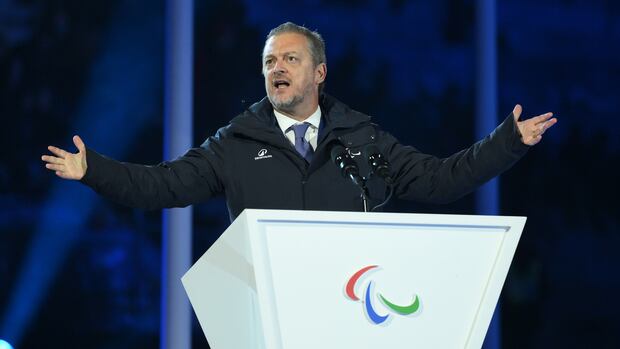
The head of the International Paralympic Committee expressed disappointment over the grievances raised by Ukraine’s National Paralympic Committee during the Milan-Cortina Games, suggesting they were an effort to divert attention from sports to politics. Andrew Parsons, in an interview with The Associated Press on the final day of the Winter Paralympic Games, commended the competition’s outcome and addressed various topics such as the reinstatement of the Russian flag and anthem, the impact of warmer weather, and the logistical challenges of hosting the event across multiple venues.
Parsons described it as “disheartening” that the Ukrainian National Paralympic Committee and other national committees sought to shift the focus away from sports. He expressed empathy towards the situation in Ukraine but emphasized the importance of upholding regulations, even in the case of the Ukrainian committee.
While acknowledging the expected attempts by governments to steer discussions towards politics, Parsons highlighted the regrettable involvement of sports bodies in the same. He hoped that this experience would serve as a lesson for those committees prioritizing political aspects over sports.
In response, Valerii Sushkevych, president of the Ukraine National Paralympic Committee, stated in a telephone interview with the AP that advocating for peace and denouncing war was a matter of human rights, not politics. He mentioned Ukraine’s decision to boycott certain ceremonies due to the IPC’s authorization of Russian athletes to compete under their flag.
Furthermore, Ukraine’s Paralympic committee accused the IPC and organizers of subjecting their athletes and coaches to “systematic pressure,” citing incidents like the removal of a Ukrainian flag and restrictions on certain expressions during ceremonies. The IPC and local organizers defended their actions amidst the accusations.
Regarding the return of the Russian flag and anthem at the Paralympics, Parsons explained that the decision was made in the best interest of the Paralympic movement. He clarified that the focus was not to influence other sporting bodies but rather to fulfill the mission of promoting inclusivity through Para sport.
Parsons also addressed the impact of warmer weather on the Paralympics, noting the necessity of ongoing discussions on adapting to changing climate conditions for future events. He acknowledged the complexity of organizing spread-out Games across different clusters but emphasized the success of this model in reducing costs and expressed optimism for its continuity in upcoming editions.