
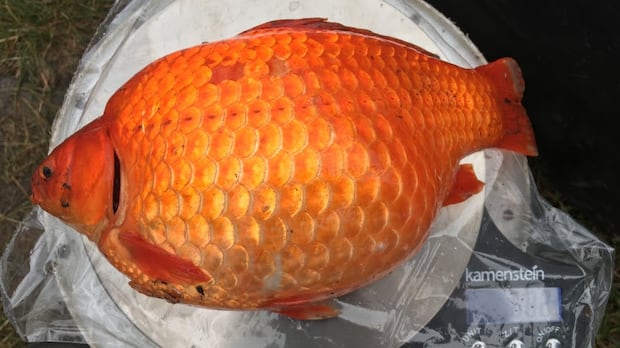
In Alberta, schools of invasive goldfish, some as large as dinner plates, are causing a major concern for native ecosystems. The provincial government is raising awareness about the risks posed by the presence of goldfish in various bodies of water throughout Alberta.
According to Alberta’s aquatic invasive species specialist, Nicole Kimmel, over 100 locations in the province have reported the presence of goldfish, with new locations being identified each year. Contrary to popular belief, these goldfish are not accidentally entering waterways but are intentionally being released into them, where they are not only surviving but also reproducing effectively.
To combat this issue, the province has launched the “Don’t Let It Loose” campaign to deter the illegal release of species into water bodies, punishable by fines of up to $100,000 and/or a year in prison. The campaign emphasizes the importance of not introducing non-native species into Alberta’s waters, as it can lead to ecological imbalances and the spread of diseases.
Goldfish, known for their adaptability and rapid reproduction rates, pose a significant threat to native aquatic species. Unlike native fish that have specific dietary preferences and breeding habitats, goldfish can thrive in various conditions and produce a large number of offspring within a short period.
This problem is not unique to Alberta, as goldfish are considered “global invaders” due to their ability to survive in diverse environments. University of Toronto biology professor Nicholas Mandrak highlights the prevalence of goldfish in Canada and worldwide, noting their presence even in extreme locations like Siberia.
Storm-water management ponds serve as ideal breeding grounds for goldfish, providing a warmer environment that promotes their rapid growth and reproduction. Efforts are underway to study and control the spread of goldfish from these ponds into natural waterways to prevent further ecological disruptions.
The Alberta government stresses the importance of reporting sightings of goldfish and other invasive fish to the Aquatic Invasive Species Hotline for proper identification and management. Additionally, individuals witnessing the deliberate release of invasive species are urged to report such activities to the Report A Poacher hotline for immediate action.