
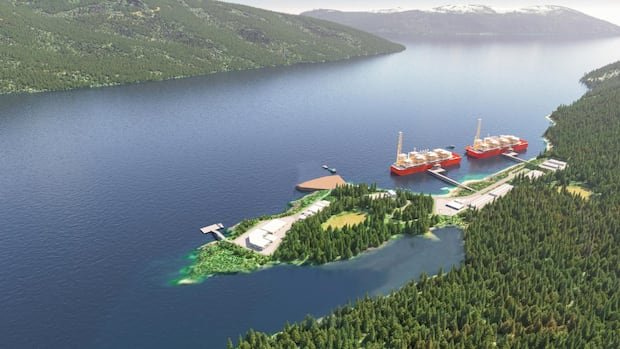
A second German energy company has shown interest in procuring liquefied natural gas from the Ksi Lisims project on the northern British Columbia coast. Duesseldorf-based Uniper and Ksi Lisims LNG announced a letter of interest for a potential purchase of two million tonnes of gas annually, starting as early as 2032. The agreement sets out key commercial terms for a more definitive supply deal with Uniper, which primarily serves markets in Germany, the United Kingdom, Sweden, and the Netherlands.
Uniper, with 18.5 gigawatts of power capacity, is a significant LNG importer in northwestern Europe. The German government assumed control during the 2022 energy crisis following Russia’s Ukraine invasion but is now moving towards privatization. CEO Michael Lewis emphasized the importance of diversifying Uniper’s LNG sources, citing Canada’s abundant gas resources, stable political environment, and reliable regulations.
The Ksi Lisims project, led by Houston-based Western LNG and Rockies LNG, with the involvement of Canadian gas producers and the Nisga’a Nation, aims to operate a floating LNG plant exporting up to 12 million tonnes annually from Pearse Island near the Alaska border. While the $10 billion venture has regulatory approval, the partners are yet to make a final investment decision, with securing long-term supply agreements being a crucial step.
Davis Thames, CEO of Western LNG, highlighted the project’s alignment with energy security, environmental responsibility, and community-focused development. The recent deal with SEFE for one million tonnes of LNG annually over a potential 20-year period underscores international interest in diversifying gas supply away from traditional sources like Russia.
Despite geographical challenges, including proximity to Canada, Germany’s interest in Canadian gas reflects a broader trend among European countries seeking alternatives to Russian gas post-Ukraine invasion. The disruption of LNG supplies from the Middle East due to the U.S.-Israel conflict has further fueled this shift. Potential transport routes for gas from Ksi Lisims to Germany include the Panama Canal, South America, Africa, or swap deals with other companies.
The Uniper-Ksi Lisims agreement is seen as a strategic move by both Canadian and German stakeholders, serving political and commercial objectives. Alex Walker, from Environmental Defence, noted how the deal aligns with national interests for Ottawa and validates Uniper’s long-term commitments amid its privatization process. However, challenges remain, including opposition from First Nations groups and legal hurdles facing the project and associated pipeline.
The future of Ksi Lisims remains uncertain, with ongoing controversies and uncertainties surrounding its development. Despite the positive momentum and international partnerships, the project’s realization faces complexities beyond the headlines.