
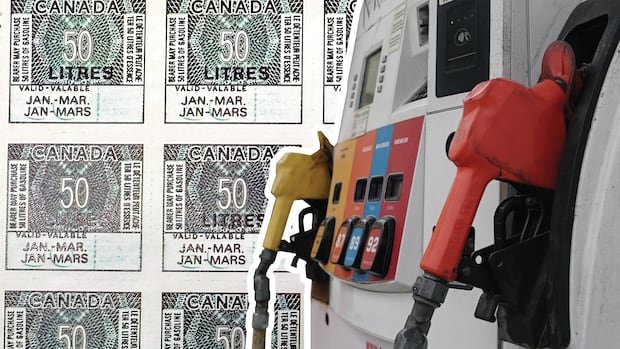
In 2026, Iran’s unrest, a significant disruption in global oil markets, and soaring gasoline prices are reminiscent of the turmoil experienced in 1979, triggered by the Iranian Revolution. At that time, the shock to the global oil supply led to panic buying and hoarding of gas worldwide, causing a surge in oil demand.
Calgary economist Peter Tertzakian recently uncovered original proofs of gasoline rationing stamps prepared by the Canadian government in response to the crisis. These stamps, entitling holders to 50 liters of gas, were designed to ensure equal access to fuel. Although the stamps were not ultimately circulated due to stabilized supply, they serve as a reminder of the unpredictability of oil shortages.
The current escalation in the Middle East following the U.S. and Israel’s attack on Iran has significantly impacted global gas prices, with oil prices surpassing $100 US per barrel since the conflict began on Feb. 28. Gasoline prices in Canada have risen sharply to about $1.68 per liter on average, up from $1.29 just last month.
While several nations have already implemented gas hoarding and rationing measures, Canada has not yet taken such steps. However, with the history of gas rationing during the 1970s and ’80s, as seen in responses to previous oil crises, the possibility of gas rationing remains on the table, according to Tertzakian.
Looking back at past gas shortages, the U.S. and Canada both considered gas rationing measures and even produced rationing stamps but did not issue them. Tertzakian notes that the world economy’s increased dependence on oil commodities today poses new challenges in times of crisis, emphasizing the importance of strategic planning for vital commodities in the face of global scarcity.
As Canadians grapple with soaring gas prices, Tertzakian suggests that gas rationing could become a reality in Canada, especially in the event of a physical oil shortage or a global scarcity driving prices to unprecedented levels. With history as a guide, preparations and strategic actions are essential to manage and share vital resources during times of crisis.