
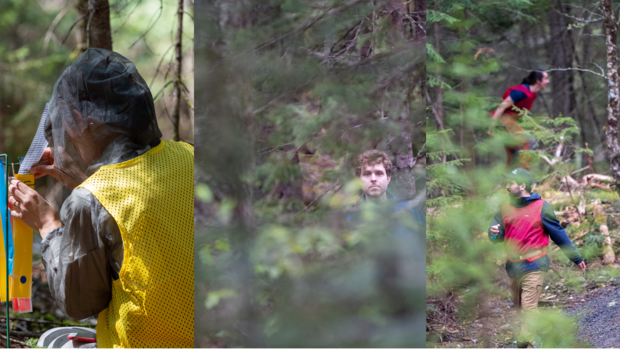
Université Laval ecologist David Bolduc recently led a fascinating study in Quebec’s forests to explore predator-prey dynamics. Bolduc and his team, along with students from various countries, conducted a game simulation in Ãco-Laurentides park near Val-Morin.
During the simulation, participants were divided into prey, mesopredators, and apex predators groups, each with specific roles in the game. The prey focused on finding resources, reproducing with team members, and avoiding capture by predators, while the predators aimed to catch the prey.
The study, published in the journal Methods in Ecology and Evolution, revealed intriguing parallels between human behavior in the game and natural wildlife interactions. However, researchers emphasize the need for real-world observations to validate these findings.
By using controlled variables in the game, scientists can test hypotheses about predator-prey dynamics in different scenarios, providing valuable insights for future wildlife research. While the game offers a unique perspective on ecological theory, it serves primarily as an educational tool, fostering discussions on animal behavior and ecological concepts.
External experts, including ecologist Mathieu Leblond and biologist Jean-Philippe Gibert, praised the study’s innovative approach but highlighted the inherent differences between human and wild animal behaviors. Despite these distinctions, the game provides a valuable platform for learning and understanding ecological principles in an engaging manner.