
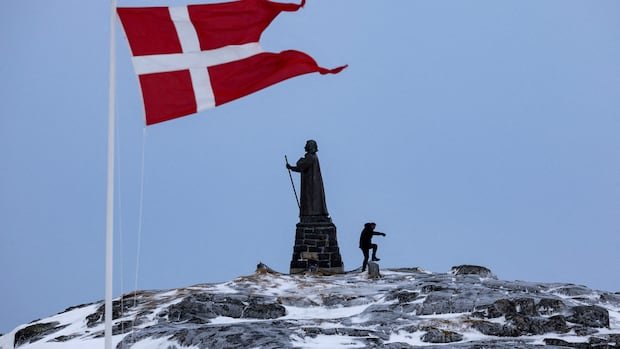
European capitals are on high alert due to the Trump administration’s aggressive stance towards Greenland, which has escalated into a major crisis. European leaders have set new boundaries, cautioning that NATO’s existence is at stake if President Donald Trump oversteps them. Despite warnings, the White House has suggested the use of military force against allies as an option, intensifying the situation.
The unprecedented challenge posed by the U.S., a historical security ally for Europe, has prompted European leaders to confront Trump’s unilateral actions. Following the recent American military operation in Venezuela involving President Nicolás Maduro, NATO’s European leaders are no longer willing to overlook Trump’s unilateral tendencies.
Seven European leaders released a statement asserting that Greenland’s fate lies with Denmark and Greenland alone, challenging Trump to cooperate with NATO for Arctic security goals instead of pressuring Denmark. Greenland, semi-autonomous with a population of around 56,000, falls under Denmark’s foreign policy and defense jurisdiction.
The White House remains resolute in its pursuit of Greenland, emphasizing military might as a tool at the president’s disposal. The U.S.’s formidable military strength, with an annual budget nearing $1 trillion, dwarfs that of Europe’s NATO members. Despite recent European investments in military infrastructure, Europe heavily depends on American military support for defense capabilities.
Trump’s interest in Greenland aligns with a broader strategy to sever ties with Europe, as key figures in his administration portray European institutions as weak. The U.S. administration’s approach to Greenland includes offering the island independence with U.S. military access or purchasing it outright.
European leaders are striving to dissuade Trump from unilateral actions that could jeopardize NATO and post-Second World War alliances. The potential ramifications of American aggression extend to NATO’s dissolution, raising concerns among diplomats and analysts about the future of transatlantic relations.