
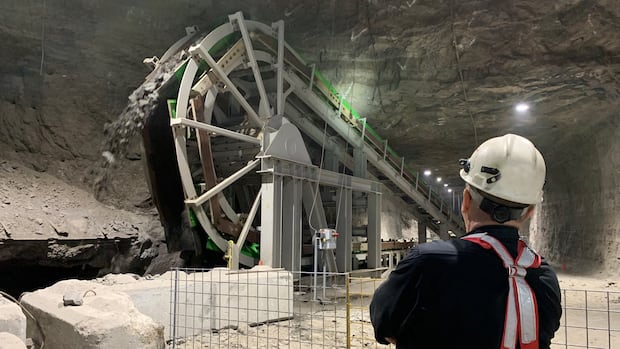
A mining equipment manufacturer based in Sudbury highlights the positive impact of high oil prices on its profitability, with mining companies seeking alternatives to diesel-powered machinery. Railveyor specializes in electric rail systems for ore transportation in mines. Tas Mohamed, the company’s CEO, mentioned that mining companies are exploring redesigning mine sites to incorporate Railveyor due to the significant operating cost savings in haulage. The surge in oil prices, attributed to the ongoing conflict in Iran, has made running diesel equipment more costly, affecting 40 to 50 percent of mining operating expenses.
The mining industry is gradually shifting from diesel trucks to electric rail systems, conveyor systems, and battery-electric vehicles to combat rising fuel costs. Gertjan Bekkers, a former executive at Torex Gold Resources and principal advisor at Poplar and Shield Advisory, noted that while most mining equipment in Ontario still relies on diesel, the trend is evolving. Operators using electrical or battery-electric equipment have been shielded from the financial impacts of escalating fuel prices compared to those heavily dependent on diesel.
Although the upfront costs of battery-electric mining equipment can be up to three times higher than diesel counterparts, the fixed hydro costs offer long-term savings. Additionally, electric vehicles help underground mines save on ventilation expenses as they require less powerful ventilation systems compared to diesel equipment. Glencore’s Onaping Depth project in Sudbury serves as a prime example of successful electric vehicle integration in mining operations.
Transitioning existing mines from diesel to electric equipment poses financial challenges, according to Marla Tremblay, the executive director of MineConnect in Sudbury. She emphasized that new mines or expansions find it easier to adopt battery-electric vehicles from the start. MacLean Engineering, a mining equipment manufacturer, aims to fully transition to electric vehicles by 2040, with a current share of electric vehicle sales ranging from 10 to 20 percent. The industry anticipates a broader adoption of electric mining equipment as early adopters showcase the performance benefits, prompting other companies to consider the switch.