
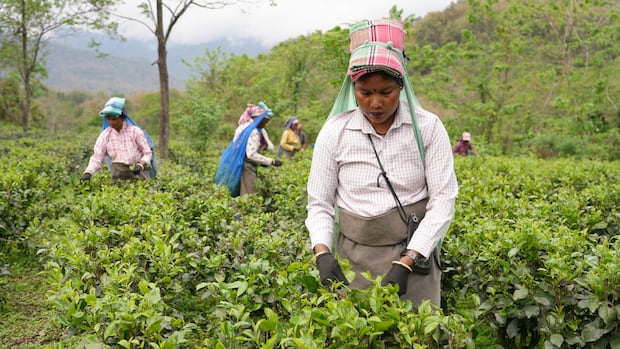
On a foggy day in March in Darjeeling, Satish Mitruka strolls among the dried leaves of his tea plantation, discussing how shifting weather patterns impact his business. Mitruka, a third-generation tea grower in the West Bengal region of India’s northeast, expresses concern over the industry’s decline due to changing climatic conditions. The period from late February to early March marks the start of the primary harvest of Darjeeling tea, known as the “champagne of teas,” renowned for its aroma and flavor, fetching prices as high as $2,200 per kilogram.
Unusual weather conditions, with prolonged dry spells followed by heavy rainfall, have posed challenges this year, affecting the quality of the tea leaves and jeopardizing the region’s reputation. Mitruka, speaking at Nurbong Tea Garden, highlights the impact of altered climate patterns on the cultivation of rain-dependent tea crops.
Darjeeling, with its 87 certified tea estates, experiences four seasonal harvests, with the first flush producing the most delicate and prized tea leaves. However, erratic weather conditions are disrupting the traditional taste of Darjeeling tea, threatening its long-standing reputation built over nearly two centuries. Mitruka emphasizes the importance of timely and sufficient rainfall for the growth of premium tea leaves.
The Himalayan region faces the brunt of climate change, with rising temperatures and unpredictable rainfall patterns becoming the norm. Eklabya Sharma, an ecologist based in Siliguri, highlights the accelerated warming in the Himalayas, leading to glacier melt, altered precipitation patterns, and increased flood occurrences. Sharma underscores the critical role of winter rains in nurturing tea plants for a successful harvest.
The fluctuating weather, including devastating downpours and landslides, has impacted tea production in the region, with buyers showing reluctance towards weather-damaged tea. Rishi Saria, from Gopaldhara and Rohini tea estates, expresses concerns over the recurrent damage to the first flush due to prolonged dry spells, affecting the region’s most valuable crop.
As the taste of Darjeeling tea diminishes due to climate-related challenges, there are fears of losing the region’s identity as a premium tea producer. The declining profitability and reluctance of the younger generation to join the tea industry highlight the generational fears looming over Darjeeling’s tea tradition, further exacerbated by the changing climate conditions.
Mitruka, echoing the sentiments of many in the industry, emphasizes the detrimental impact of unfavorable weather conditions on tea cultivation. The uncertain future of Darjeeling tea production reflects a broader concern over the sustainability of the industry amid climatic uncertainties.