
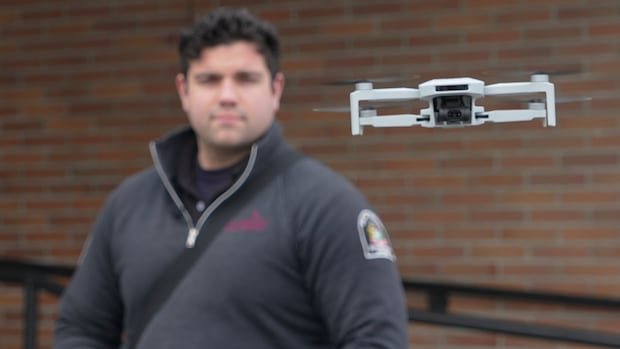
The City of Cranbrook has incorporated drones into its public safety measures to oversee former encampment sites and wooded areas where unhoused individuals lived due to public safety concerns in the East Kootenay community. This initiative is part of an extensive public safety strategy being implemented by the city, involving the collaboration of bylaw officers and the RCMP, along with the addition of more bike patrols.
City officials emphasize that the use of drones is not solely focused on the presence of unhoused individuals but on addressing specific safety hazards associated with encampments that have been encountered in the past. Bylaw enforcement officer Kyle Trenholm highlighted previous incidents of fire hazards and structural dangers, such as loose propane tanks, campfires near shelters, and unstable structures leading to injuries.
The introduction of drones has significantly enhanced safety operations since their deployment in June, providing real-time monitoring of inaccessible areas and enabling quicker responses to ground-level changes. Drones are now deployed before officers or city staff enter encampments, particularly when hazardous or flammable materials are mentioned in complaints.
The integration of bylaw officers into daily operations has improved communication and collaboration between departments, according to RCMP detachment commander Barry Graham. However, some residents have raised privacy concerns and questioned whether enforcement alone can address the underlying issues related to homelessness, addiction, and mental health.
The new safety strategy aims to enhance enforcement visibility, reduce response times, and improve co-ordination among various departments, moving away from the previous fragmented approach. The city acknowledges that addressing the complex societal challenges will require ongoing efforts and collaboration from all stakeholders to achieve a more balanced and effective system.
City officials stress that the implementation of the new safety model is a long-term process that will undergo evaluation over time. They anticipate improved communication, co-ordinated patrols, and increased engagement with businesses and neighborhoods as the strategy evolves. The ultimate goal is to create a more proactive and comprehensive approach that combines compassion with accountability to address the multifaceted issues facing the community.