
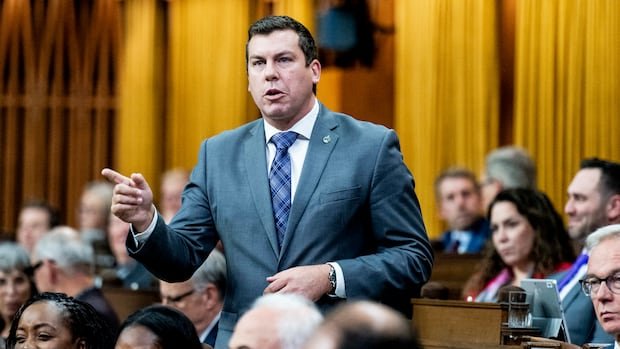
As preparations are underway for the prime minister’s upcoming visit to China, Member of Parliament Kody Blois, who serves as the parliamentary secretary, has indicated that Mark Carney is eager to “realign” Canada’s previously strained relationship with the Chinese government and explore economic prospects for both nations.
According to Blois, the forthcoming trip serves as a continuation of efforts to enhance bilateral ties, with Carney emphasizing the potential for collaboration and mutual benefits between the two countries. The prime minister is scheduled to hold discussions with Chinese President Xi Jinping during his visit, before proceeding to Qatar on January 18 and then Switzerland from January 19 to 21 for the World Economic Forum annual meeting in Davos.
The Prairie provinces are closely monitoring the visit to China, particularly concerning the call for Carney to lift the tariffs imposed on Chinese-made electric vehicles in 2024. This move led to retaliatory measures from China, including tariffs on Canadian canola, seafood, and pork.
Blois, who will accompany Carney to China, highlighted the government’s interest in exploring cooperation in the agricultural and agri-food sectors. However, he refrained from providing specific details on the expected outcomes of the visit next week.
The impact of China’s tariffs on canola farmers in Saskatchewan has been significant, with Bill Prybylski, the president of the Agricultural Producers Association of Saskatchewan, estimating a loss of approximately $450,000 on his farm due to the tariffs. Prybylski expressed concerns about the financial implications for farmers moving forward, emphasizing the need for careful financial planning.
Although Prybylski does not anticipate an immediate resolution to the tariff issue following Carney’s visit, he remains hopeful that it will initiate constructive negotiations between the two sides. Meanwhile, Ontario Premier Doug Ford has urged Carney to maintain a firm stance on the electric vehicle tariffs, stressing the importance of not conceding to pressure.
The visit to China holds significance as it represents the first visit by a Canadian prime minister to the country since 2017. The relationship between Canada and China deteriorated in 2018 following the detention of two Canadians, a move widely viewed as retaliatory after Canada arrested Huawei’s CFO, Meng Wanzhou.
Despite the complexities surrounding the history of relations between the two nations, experts like Jody Thomas, a former national security adviser to Justin Trudeau, emphasize the importance of engaging with China to address various issues and maintain a presence in global affairs.
Michael Kovrig, one of the Canadians previously detained in China, emphasized the need for Canada to pursue expanded trade relationships cautiously to safeguard national interests. He cautioned against compromising national security or policy autonomy in exchange for economic benefits.
In conclusion, Blois stressed the importance of engaging in dialogue with the Chinese government to explore areas of cooperation while acknowledging the existence of potential limitations. He emphasized the necessity of direct engagement to foster constructive relationships and advance mutual interests.