
The Canadian government has authorized the deployment of military personnel to assist the Pimicikamak Cree Nation following a prolonged power outage that caused significant damage to numerous residences and forced the evacuation of thousands of individuals. The announcement was made by Eleanor Olszewski, Canada’s emergency management minister, in a communication shared on social media.
The specialized team from the Canadian Armed Forces will offer targeted assessment and advisory services focused on critical areas such as water treatment and sewage systems, power generation, project management, and logistics, as stated by Olszewski. The decision to dispatch military personnel was made in response to a formal request from the Pimicikamak Cree Nation leadership nine days prior.
Chief David Monias expressed relief upon receiving confirmation that military support would be forthcoming, particularly for addressing the challenges facing the water and sewer infrastructure. Approximately 10 to 15 military members with expertise in engineering and logistics are expected to arrive in the community over the weekend to provide assistance.
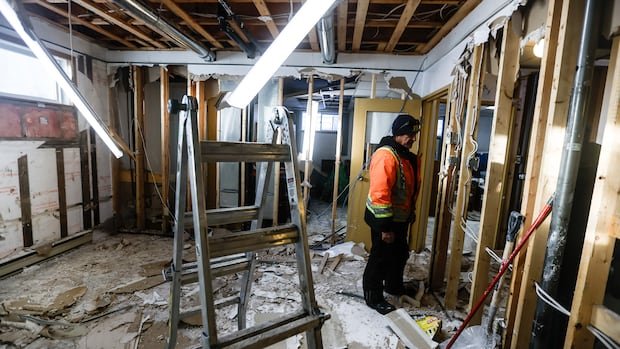
The restoration efforts are ongoing, with tradespeople, both local and volunteered, engaged in evaluating and repairing the affected homes. The extent of the damage to over 1,300 residences in Pimicikamak is still being assessed, with at least 200 homes deemed uninhabitable due to the aftermath of the power outage.
The power disruption, caused by a broken 300-meter-long power line in the Nelson River on December 28, led to frozen pipes bursting upon power restoration, resulting in widespread plumbing issues. Approximately 4,000 individuals from the community have been relocated to other areas, including Winnipeg and Thompson, out of the total on-reserve population of 7,000.
Premier Wab Kinew expressed gratitude to the armed forces for their prompt response, emphasizing the crucial role they play in delivering essential support to Pimicikamak. Pimicikamak Coun. Shirley Robinson echoed the sentiment, highlighting the community’s urgent need for assistance and the desire to facilitate the safe return of evacuees to their homes. Leadership is actively working to ensure the timely repatriation of displaced individuals as soon as feasible.