
In April, Canadian astronaut Jeremy Hansen made history by journeying farther into space than any human before, as part of the Artemis II mission with three NASA astronauts around the moon. This mission is a significant step towards NASA’s goal of returning humans to the lunar surface by 2028 with the Artemis IV mission.
Unlike the Apollo program, NASA’s Artemis program is a global initiative with 68 countries, including Canada, as signatories of the Artemis Accords. The plan is not just a short visit but aims for a sustainable human presence on the moon, requiring infrastructure like vehicles, cameras, and power sources.
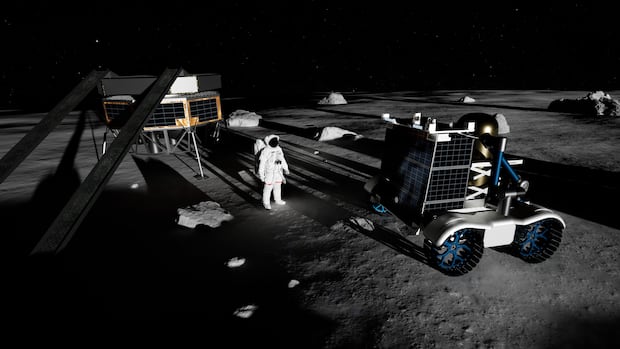
Canada is playing a crucial role in this lunar exploration endeavor, with Canadian technology already making its mark. While a small lunar rover project was canceled by the Canadian Space Agency in March, plans for a larger lunar utility vehicle are in progress, with Canadian companies like MDA Space, Canadensys Aerospace, and Mission Control competing for the development contract.
Recently, NASA announced the Moon Base project near the lunar south pole to replace the Lunar Gateway space station, aiming to create a sustainable living and working space. The construction will occur in phases, with commercial partnerships for lunar rovers and landers.
Canada’s Canadensys company has contributed to lunar missions with camera systems on the moon. Mission Control, another Canadian company, is also developing a lunar utility vehicle, emphasizing Canada’s expertise in space robotics.
Addressing power needs for the lunar base, the Canadian Strategic Missions Corporation is working on a low-enriched uranium nuclear reactor for moon usage. This technology could have applications beyond the moon, such as in remote regions on Earth.
With opportunities like mining and robotics on the moon, Canadian companies like MDA Space are well-positioned to contribute. Canada stands at a pivotal moment to leverage its space capabilities and make a significant impact on lunar exploration efforts.