
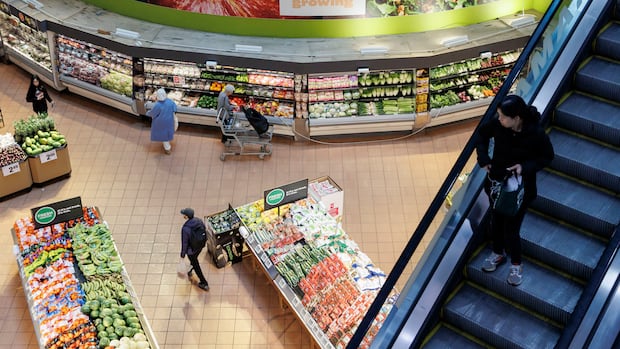
A potential boost in competition within Canada’s grocery sector could come from initiatives such as enhancing food terminals, increasing domestic food production, and enforcing anticompetitive regulations, as proposed by Prime Minister Mark Carney’s $3.2-billion food security strategy. The plan entails a $1-billion investment to expand existing food terminals and establish new ones, like Toronto’s Ontario Food Terminal, to facilitate independent grocers in purchasing goods at competitive prices. Additionally, the strategy allocates $12.9 million annually to the Competition Bureau to detect anticompetitive behavior in the industry and take enforcement measures. It also includes funding to support domestic food processing and greenhouse cultivation.
Gary Sands, from the Canadian Federation of Independent Grocers, expressed optimism about these measures, foreseeing benefits for both independent grocers and consumers. Sands emphasized the significance of additional food terminals, which could enhance the competitiveness of independent grocers. The Ontario Food Terminal, described as a crucial hub for small and medium-sized producers, offers a wide variety of fresh produce and enables grocers to negotiate lower prices with multiple suppliers.
Munther Zeid, owner of Food Fare in Winnipeg, highlighted the cost-saving advantage of buying from the Ontario terminal, where he secures produce at more affordable rates compared to local suppliers. However, he still relies on major wholesalers like Sobeys and Loblaw for packaged food items. Zeid suggested that expanding terminals to offer a broader range of products beyond fresh produce could further benefit independent grocers.
The strategy’s focus on bolstering Canadian food production could potentially reduce costs by shortening the supply chain, particularly in the wake of global fuel price fluctuations. However, executives like Craig Cavin from Country Grocer remain cautious, noting that the benefits may take time to materialize, especially for Western Canada. Despite the positive outlook, doubts persist regarding the strategy’s ability to challenge the dominance of major grocery chains in the market.
The evolving landscape of competition in the grocery sector has seen various government interventions over the years, with efforts to address issues both at the retail level and throughout the supply chain. The current strategy’s emphasis on supply chain competition is seen as a promising step, although its full impact may not be immediate. The long-term effects of these measures remain uncertain, with the hope that they will enhance the operations of existing independent grocers without significantly disrupting the market dominance of major chains.