
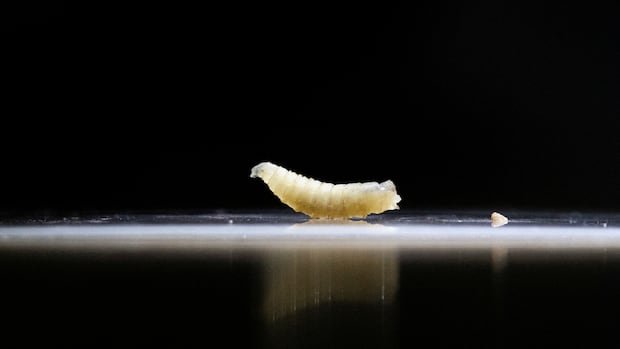
Canada’s beef industry is not at risk from screwworms, but a call to action has been made for farmers and ranchers to heighten their vigilance following the reappearance of the flesh-eating parasite in the U.S. The Canadian Food Inspection Agency has imposed a temporary restriction on livestock imports from affected regions in the United States after the detection of New World screwworm in a calf in Texas. The U.S. Department of Agriculture has confirmed additional cases in Texas and New Mexico.
Although experts assure that the screwworm would not survive the Canadian winter, precautions are being taken to prevent any potential threats. The Chief Veterinary Officer of the Canadian Cattle Association, Leigh Rosengren, commended the ban on Texas livestock imports, emphasizing the importance of safeguarding against any potential risks to Canada’s export market.
The return of the screwworm fly, a menace to cattle ranchers from the 1930s to the 1960s, has raised concerns following recent outbreaks in Panama, Costa Rica, Nicaragua, and Mexico. The discovery of an infestation in Texas marks the first appearance of screwworms in the state since 1966.
To prevent the spread of the parasite, Canadian producers are advised to review and reinforce their biosecurity measures, enhance animal monitoring, especially of neonatal cows, and maintain a close relationship with veterinarians. Although screwworm infestations do not pose a food safety risk, they underscore the necessity of prioritizing national herd health in the agriculture sector.
The New World screwworm fly, unique for its larvae that feed on live tissue, poses a significant threat to warm-blooded animals, including humans. While the flies are unlikely to survive in Canada, the possibility of imported cases during warmer months is a concern. Efforts to combat the screwworm infestation include the production of sterile flies to control the population and prevent further spread.
With over 171,700 animals and 2,070 individuals affected in Central America and Mexico, measures are being taken to mitigate the impact. Investments in fly-breeding facilities and sterile fly production are underway to address the issue. Collaboration with South American countries is being emphasized to eradicate screwworm from the Americas entirely.
In light of the situation, the focus is on managing the risks associated with screwworm infestations, while also exploring opportunities for international cooperation to eliminate the parasite from the region.