
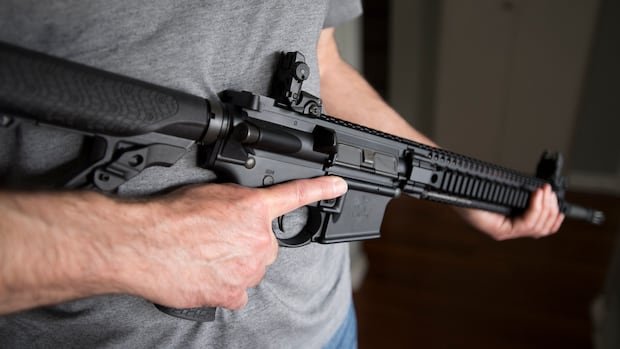
The Canadian federal government has announced the next phase of its national gun buyback initiative, providing citizens with approximately two months to express their interest in participating to receive compensation for surrendering prohibited firearms. Since 2020, Ottawa has prohibited around 2,500 types of firearms categorized as “assault-style,” contending that these weapons are intended for combat rather than hunting or recreational shooting.
During a recent news briefing, Public Safety Minister Gary Anandasangaree emphasized that while participation in the compensation program is voluntary, compliance with the law is mandatory. The declaration period commences on Monday and extends until March 31, allowing Canadians to submit declarations through an online portal or paper forms.
Compensation payments will be processed within 45 business days following the successful validation of the surrendered firearm. The allocated funding amounts to $248.6 million, enabling the government to compensate for nearly 136,000 outlawed firearms from individual owners. Failure to declare participation by the March 31 deadline disqualifies firearm owners from compensation under the program.
Compensation will be allocated on a first-come, first-served basis, dependent on the submission date of the declaration and the availability of program funds at that time. The amnesty period for possessing banned firearms ends on October 30, 2026. Post-deadline possession of such firearms will constitute a breach of the law, potentially leading to criminal prosecution.
Individuals who opt out of the buyback program have the option to permanently deactivate their firearms at their expense, surrender the firearms to local law enforcement without compensation, or export the firearms with the appropriate permits. The federal government plans to reopen the buyback program for businesses possessing prohibited firearms following the nationwide declaration phase.
Despite opposition from some gun owners and the Conservative Party of Canada, the program moves forward, with provinces like Alberta declining to participate. Saskatchewan introduced legislative amendments requiring fair compensation for seized firearms, leading to the exclusion of these provinces from the buyback program. The Canadian Coalition for Firearm Rights criticized the initiative, advocating for broader compensation coverage and redirecting focus towards crime prevention.
Anandasangaree defended the buyback program, emphasizing its contribution to public safety by removing assault-style firearms from the community. A coalition of gun control advocacy groups praised the program launch as a significant step towards enhancing public safety, citing the inherent risks these firearms pose.
The pilot project in Cape Breton, Nova Scotia, collected and destroyed only 25 firearms out of an anticipated 200 during a six-week trial period. The initiative faced challenges and low participation rates in several provinces, prompting criticism from firearm rights groups.
In a previous incident, Anandasangaree faced backlash over comments suggesting leniency towards non-compliance with the firearms ban, clarifying later that police enforcement remains a priority despite resource constraints. The minister’s remarks regarding the buyback’s political importance in Quebec were deemed misjudged, with assurances of law enforcement commitment to the program’s execution.