
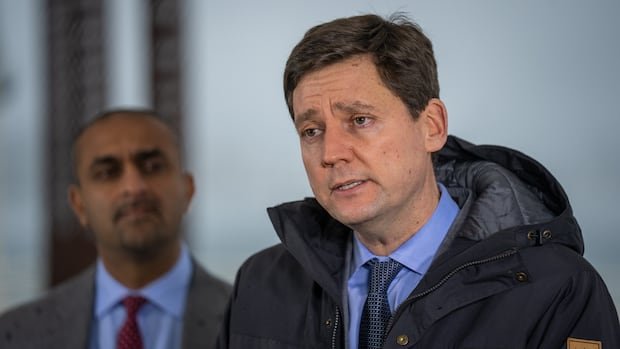
Premier David Eby of British Columbia has rejected the notion of a new pipeline to the province’s northern coast and instead proposed investing taxpayer funds in a Canadian refinery. This suggestion comes following Alberta Premier Danielle Smith’s push for a rapid pipeline development amidst recent events in Venezuela. Eby emphasized the importance of enhancing Canadian refining capabilities to reduce reliance on foreign refineries.
Eby highlighted the need to prioritize building refining capacity over exporting raw resources, especially with the Trans Mountain pipeline not operating at full capacity. Energy Minister Adrian Dix mentioned that a refinery project would likely be situated near oil reserves, potentially in Alberta, although there have been previous proposals for a refinery in British Columbia.
Experts have differing views on the benefits of a new refinery. Adam Pankratz from the University of British Columbia’s Sauder School of Business expressed skepticism, citing the substantial costs and market uncertainties associated with refining petroleum products. Marg McCuaig-Boyd, a former energy minister, acknowledged the long-term benefits of refineries but emphasized the challenges and time required for construction.
On the environmental front, Isabel Siu-Zmuidzinas from the Wilderness Committee criticized the idea of investing public funds in fossil fuel infrastructure. She advocated for directing resources towards clean energy initiatives rather than fossil fuel projects like pipelines and refineries. Siu-Zmuidzinas stressed the importance of prioritizing investments that improve lives, such as clean energy infrastructure, public housing, and public transit.
The debate surrounding pipeline versus refinery investments continues, with stakeholders calling for a strategic focus on sustainable and environmentally friendly solutions to meet energy needs.
Overall, the discussions highlight the complexities of balancing economic interests with environmental concerns in the energy sector.