
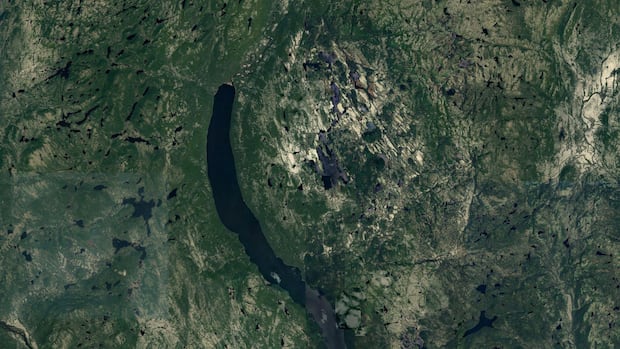
An amateur astronomer named Joël Lapointe made a surprising discovery in Quebec’s Côte-Nord region in 2024 while exploring Google Maps. Initially planning a camping trip, Lapointe came across what appeared to be a suspicious pit on his screen, later confirmed by researchers as a previously unidentified meteor crater dating back 390 million years.
Gordon Osinski, a planetary geology professor at Western University and part of the team that verified the crater in 2025, described the find as thrilling. Osinski, who manages Impact Earth, a platform dedicated to validated impact sites, highlighted the rarity of such discoveries amidst numerous false leads reported by the public.
Osinski will present the team’s findings at the upcoming annual congress of the Meteoritical Society in Germany. The challenging expedition to the crater site involved collecting samples over five days in rugged terrain, with Osinski noting it was one of his toughest field experiences despite his extensive global work history.
The team uncovered significant evidence during the expedition, including impact melt rock formations resulting from the asteroid impact’s intense heat and pressure. The discovery of shatter cones, unique shock wave remnants found exclusively in impact craters or nuclear test sites, provided further insights into the crater’s formation.
Jérôme Gattacceca, a geologist involved in the mission, emphasized the profound lesson of continuous planetary surprises, echoing Lapointe’s sentiment of not overlooking intuitive observations, regardless of expertise. Lapointe expressed delight at the crater’s confirmation, highlighting the extraordinary nature of his find and the respectful naming of the crater, Uhackatik, in consultation with the Innu Council of Ekuanitshit.