
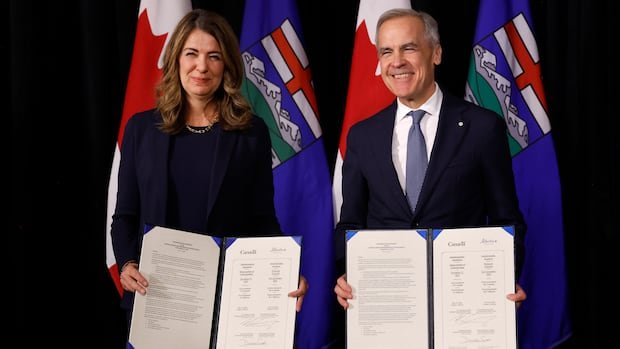
The Alberta government’s proposed timeline for the potential new West Coast oil pipeline construction is ambitious but faces several challenges, according to analysts at CIBC World Markets. The province aims to submit a proposal to the federal major projects office by July 1, have it designated a project of national interest by Oct. 1, and commence construction as early as Sept. 1, 2027. Oil flow could start around 2033 or 2034, as per a provincial official.
CIBC analysts Robert Catellier and Rogan Anantharajah view these timelines as optimistic and best-case scenarios. The recent agreement between Alberta and Ottawa on increasing the market price of carbon to $130 a tonne by 2040 was one of the final elements in the energy accord. The remaining side-agreement involving the Pathways carbon capture project funding with federal and provincial governments and industry players represented by the Oil Sands Alliance is crucial for the pipeline project.
The Alberta government is leading the pipeline application process as no private-sector entity has yet come forward to take on the associated risks and costs. Although several pipeline companies are considering involvement, certain conditions need resolution to support the substantial investment required. The proposed pipeline aims to transport up to one million barrels of oilsands crude daily to the West Coast, significantly increasing access to Asian markets compared to the existing Trans Mountain pipeline.
Negotiations with British Columbia, consultations with Indigenous groups, and concerns over the oil tanker ban on the northern B.C. coast are still pending. Despite challenges, the construction timeline clarity is seen as a positive development by ATB Financial chief economist Mark Parsons, who believes it will create pressure to expedite the project. ATB estimates suggest that the Pathways project and expanded pipeline capacity could have significant positive impacts on both Canada’s and Alberta’s GDP between 2027 and 2035, if successfully implemented.