
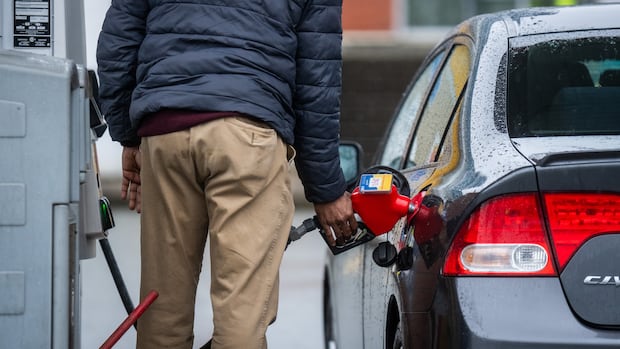
No, your vision isn’t misleading you — gas prices are indeed declining across Canada.
As of Thursday, the national average for gas prices in Canada was $1.514 per litre, as reported by price tracking website affordableenergy.ca. This marks a decrease of approximately seven cents from the previous week and is about 28 cents lower than the average recorded 30 days ago, according to the site.
In certain provinces, including Manitoba and Saskatchewan, average prices have fallen by over 30 cents compared to last month’s average, as noted by GasBuddy petroleum analyst Patrick De Haan.
“In fact, in some parts of Calgary, we are observing gas stations selling … for less than a dollar per litre again,” De Haan stated.
He mentioned that prices might continue to decrease by another five to ten cents per litre nationwide in the upcoming weeks — provided there are no new developments regarding the U.S. conflict in Iran, which previously almost halted traffic through the crucial Strait of Hormuz, causing oil prices to surge.
Although gas prices remain higher than they were a year ago, the recent reductions can be attributed mainly to increased oil flow through the strait, along with seasonal influences, according to analysts.
Tanker traffic through the strait has been gradually increasing in recent months, <u:supported by U.S. military escorts navigating the waterway, as explained by Al Salazar, head of oil and gas research at Enverus. This has contributed to a decrease in crude oil prices — a barrel of Brent crude is currently just under $92 US, down from about $116 US at its peak in mid-October.
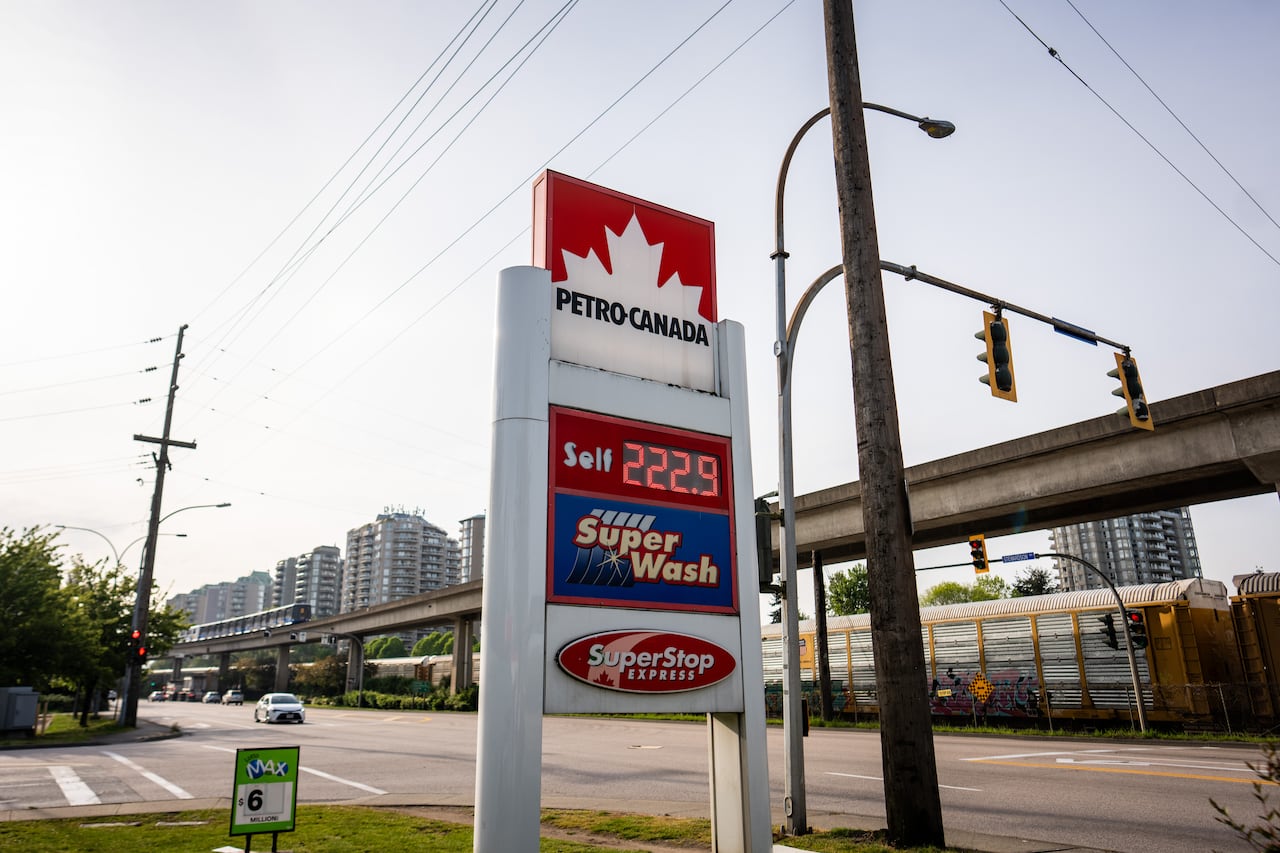
Gas prices are shown at 222.9¢ a litre at a gas station in New Westminster, B.C., on May 1. The oil shock triggered by the war in Iran has led to significant increases in gas prices in recent months, sometimes exceeding $2 a litre. (Ben Nelms/CBC)
“The U.S. military was effectively [helping] to protect and facilitate the passage of vessels through the strait leading up to the midterms. This has resulted in a slight surplus,” Salazar remarked.
The International Energy Agency also indicated last week that the global oil market might see a surplus in the fourth quarter due to increased oil exports from the Middle East.
At the same time, U.S. President Donald Trump has adopted a de-escalating approach regarding the war. There are anticipations that Democrats could leverage their newly acquired influence from the midterms to impede further military actions against Iran, which could contribute to a continued drop in oil prices, Salazar added.
Seasonal factors are also providing the industry with significant “breathing room,” according to De Haan.
The seasonal transition to the less expensive “winter blend” gasoline is currently underway, and refinery maintenance related to this change is coming to a close. Maintenance at the Irving Oil facility in New Brunswick was scheduled to conclude yesterday, and De Haan notes that increased production at refineries in the prairies is playing a role in the substantial price drops at the pump in Manitoba and Saskatchewan.
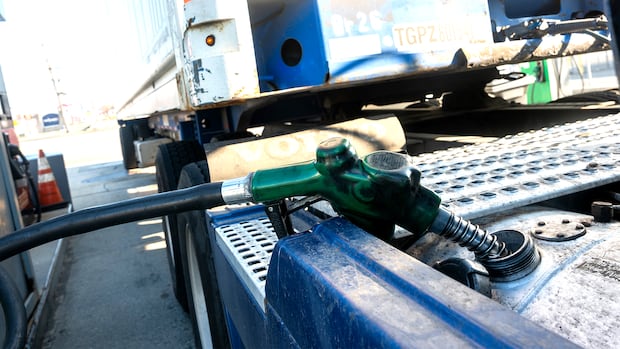
Crude oil exports through the Strait of Hormuz are gradually recovering, so why is the price of diesel skyrocketing? The National’s Eli Glasner analyzes the factors influencing the increase and explains why diesel prices are likely to remain high for the foreseeable future.
Additionally, it’s worth noting that Canadians typically drive less during the winter months as they stay indoors more, which helps to ease demand.
While the price of diesel — which has been a burden on sectors such as trucking, agriculture, and fishing — has also seen some relief, experts like Dan McTeague, president of the Canadians for Affordable Energy advocacy group, caution that this relief may be temporary.
Diesel is analogous to jet fuel and home heating oil — and demand for the latter is expected to rise as colder weather approaches, McTeague noted.
“As for diesel, this is likely as favorable as it will get by the end of this week,” he remarked during a recent interview on CBC’s Hanomansing Live.
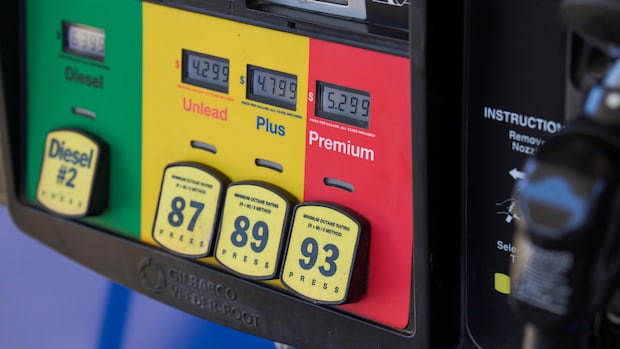
Dan McTeague believes the decline in gas prices is a result of a period of geopolitical tranquility, with no significant attacks on key energy infrastructure in Iran or Ukraine. He also expects the trend to persist for a while, but doubts that food prices will decrease soon, until energy and production costs lower overall.
De Haan anticipates that reduced gasoline prices will extend into early 2027 but warns that some of this “artificial drop” may vanish when the temporary fuel excise tax is reinstated. The tax is set to reappear at a 50 percent rate at the end of January 2027, before reverting to its full rate at the end of March.
Both De Haan and Salazar caution that prices could spike once more if tensions escalate with Iran. Particularly since attacks on vessels in the strait have seen an uptick in recent days, Salazar believes that the current relief at the pump may not endure for long.
“It truly feels like a war call. For us, it appears there isn’t a sustainable solution to stop the Iranians from attacking ships,” Salazar remarked.
“So take advantage of the temporary drop in prices, but I suspect we will see higher prices in the future.”