
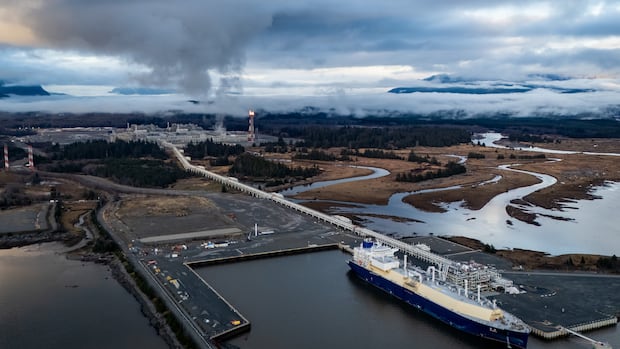
The environmental advocacy organization Stand.earth has engaged a prominent law firm to caution six significant pension funds against pouring investments into liquefied natural gas megaprojects, highlighting that climate-related and other risks could lead to legal repercussions for plan administrators.
A letter authored by Anne-Julie Asselin, a partner at Trudel Johnston & Lespérance, was dispatched last week to the trustees of the Canada Pension Plan Investment Board, Public Sector Pension Investment Board, Ontario Municipal Employees’ Retirement System, Ontario Teachers’ Pension Plan, University Pension Plan, and Healthcare of Ontario Pension Plan.
Trudel Johnston & Lespérance, based in Montreal, specializes in public interest and class action cases, including a protracted legal battle against major tobacco firms that culminated in a $32.5-billion settlement approved last year, in addition to an ongoing lawsuit against opioid manufacturers.
The firm’s attorneys were also involved in litigation concerning the now-defunct Energy East pipeline and its potential effects on whale habitats in the Gulf of St. Lawrence.
“In light of the growing financial risks linked to fossil fuel investments, it is prudent to conduct a more thorough evaluation of these investments,” Asselin stated in the letter.
“Ignoring these risks is becoming increasingly difficult to justify and may result in legal implications.”
She urged pension funds to “abstain from investing, either directly or through a private fund, in LNG Canada, Ksi Lisims LNG, or similar Canadian LNG initiatives until they can prove, through a rigorous and transparent evaluation, that such investments align with their legal and fiduciary responsibilities.”
Stand.earth and its legal advisors had prepared the letters for dispatch just as news emerged last week that four pension funds are considering investments in LNG Canada.
Leading the group is U.S. asset manager Blackstone, which includes CPPIB, OMERS, the Investment Management Corp. of Ontario, and the PSP Investment Board, all of which are looking to acquire a non-controlling interest in the Mitsubishi Corp. subsidiary involved in LNG Canada.
Asselin mentioned that the finality of the Mitsubishi agreement remains uncertain, making the warning still relevant.
“We will certainly be assessing the next steps, without a doubt,” Asselin remarked in an interview. “We were not anticipating such rapid decisions regarding LNG investments. We had hoped that it would never occur.”
LNG Canada poised for output increase
LNG Canada marks the first natural gas export facility to commence operations on Canada’s West Coast. The partners, which include Shell along with Korean, Chinese, and Malaysian firms, decided last month to proceed with an expansion aimed at doubling the plant’s output in Kitimat, B.C.
LNG Canada Phase 2 has also been classified as a national-interest initiative under federal legislation enacted last year to expedite new infrastructure projects.
Richard Brooks, climate finance director at Stand.earth, indicated that efforts to express concerns directly to pension plans regarding potential LNG investments yielded minimal response.
He explained that the letters serve to remind pension funds in legal terminology about their responsibilities and accountabilities.
Brooks mentioned that the pension funds collectively oversee $1.6 trillion in investments for millions of workers.
“There is likely no larger demographic in Canada than workers covered by these pension plans,” Brooks noted. “Thus, [Trudel Johnston & Lespérance’s] experience with class-action litigation, especially the tobacco case, resonated with us.”
Reactions from pension funds
In a news release on November 2 regarding the LNG Canada investment, Geoff Souter, managing director at CPP Investments, stated that the project “is a high-quality, globally strategic asset with strong long-term fundamentals and desirable return potential for the CPP Fund.”
A representative from CPPIB did not respond to a request for additional comments by late Tuesday, nor did officials from Ontario Teachers and the University Pension Plan. OMERS and HOOPP opted not to provide comments.
The Public Sector Pension Investment Board acknowledged receipt of the letter and expressed that it does not concur with Stand.earth’s perspective on the risks associated with LNG investments.
“PSP Investments’ investment choices, including those mentioned by Stand.earth, are made in compliance with relevant statutory and legal requirements,” the board stated.
“These decisions are made to fulfill PSP Investments’ mandate, which is to manage funds transferred to it by the Government of Canada in the best interests of contributors and beneficiaries as outlined in PSP Investments’ governing legislation, and to invest its assets to achieve the highest possible return, without excessive risk of loss, while taking into account the funding requirements and policies of the plans, along with the ability of the plans to meet their financial obligations.”
Separately, four young Canadians initiated a lawsuit last year against CPPIB, claiming the fund is neglecting the long-term interests of contributors poised to retire in the coming decades due to its investments in fossil fuels.
In a news release on Tuesday, the group Shift: Action for Pension Wealth and Planet Health announced that CPP members and environmental activists plan to gather outside Ontario Superior Court on Thursday as CPPIB seeks a judge’s ruling to dismiss the lawsuit.
Brooks stated that legal action has been a “last resort” for groups concerned about pension funds’ fossil fuel investments.
“We are certainly prepared to pursue that route if the pension funds proceed with investments [in LNG], especially after they have been adequately warned and reminded of their responsibilities.”