
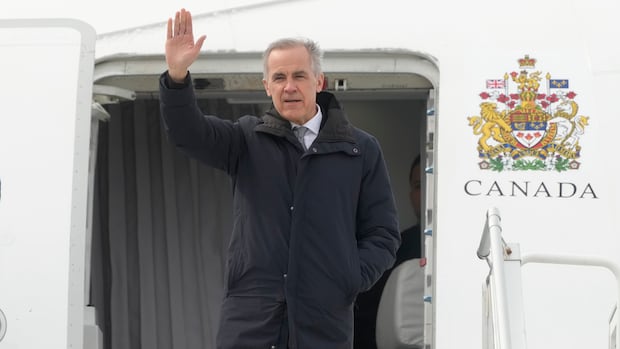
During his inaugural year as prime minister, Mark Carney demonstrated a sense of urgency.
Just two days post his swearing-in at Rideau Hall, he embarked on official trips to France and the United Kingdom. Shortly after, he entered a five-week election campaign, and a week following last spring’s election, he made his way to Washington.
Since then, Carney has visited Belgium, the Netherlands, Ukraine, Poland, Germany (twice), Latvia, Mexico, Egypt, Malaysia, Singapore, South Korea, the United Arab Emirates, South Africa, China, Qatar, Switzerland, India, Australia, Japan, and Norway. He has undertaken a second journey to France and has traveled to the U.K. three times. His visits to the United States have occurred four times.
This level of travel is quite vigorous by recent benchmarks.
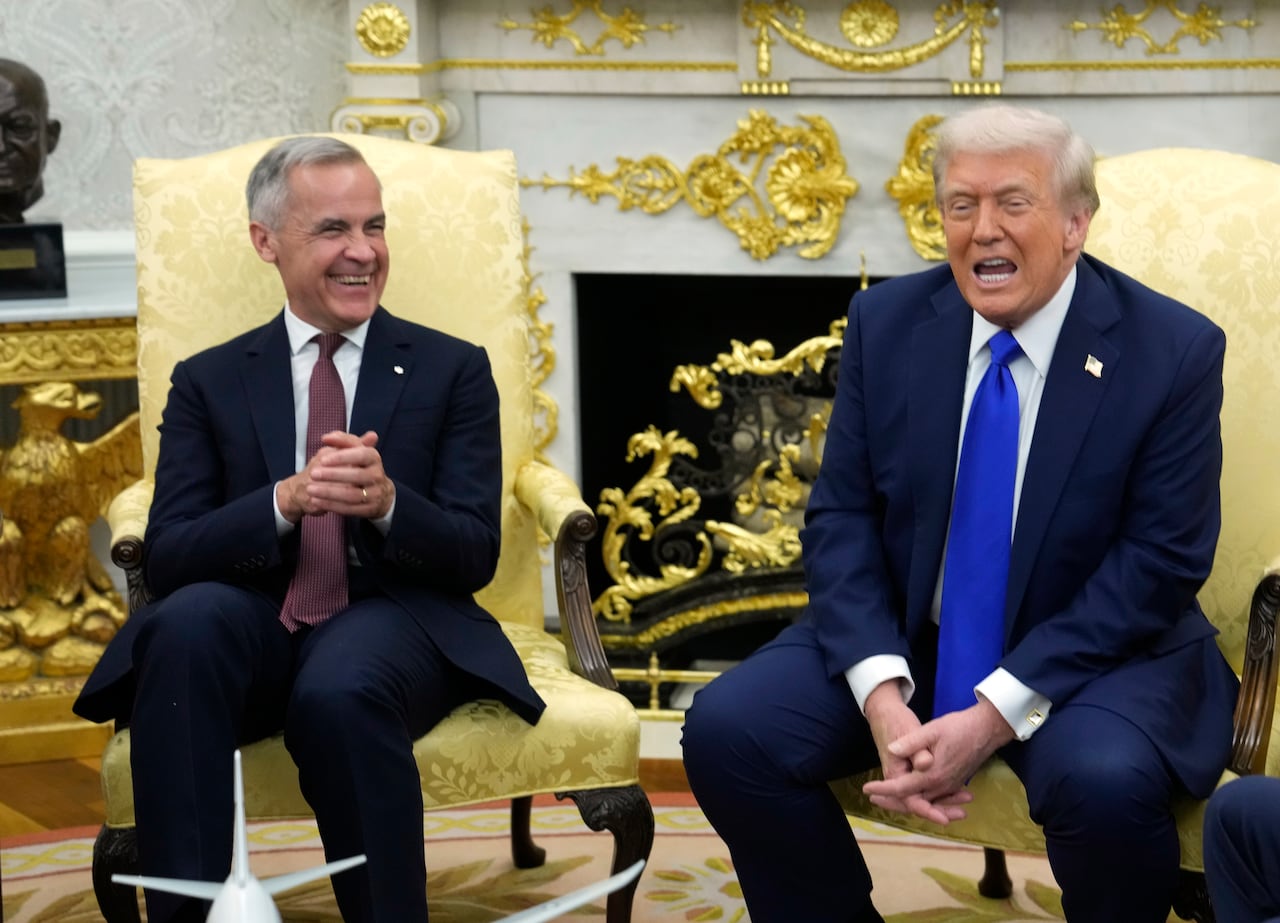
Carney’s visits to the United States have included two occasions at the Oval Office. (Adrian Wyld/The Canadian Press)
In his first year as prime minister, Carney dedicated 84 days to traveling or engaging with other nations. As per records from Global Affairs Canada, Justin Trudeau’s initial year accounted for 63 days of travel, while Stephen Harper’s total was only 34 days.
The extensive travel could reflect the current state Canada finds itself in or how Carney, who entered the role with distinctive international experience, is choosing to adapt. It may also signal a shift in the prime minister’s responsibilities, suggesting that the role will increasingly require a global perspective.
Is travel beneficial for politics?
During an appearance on the Herle Burly podcast in early January, Ian Brodie, who served as Harper’s first chief of staff, expressed his belief that international travel tends to have a negative impact politically for a prime minister.
“The issue is that traveling often means sacrificing the domestic agenda,” Brodie stated. “We investigated this during my time as chief of staff, and whenever Mr. Harper was overseas… no matter the purpose or how well the trip was planned, he consistently lost ground in public perception, media coverage, and political backing during his time abroad.”
Brodie pointed out that this finding contradicted the common belief that appearing on the global stage allows a prime minister to transcend domestic political disputes and project a statesman-like image. He believes Carney is spending excessive time outside the country, which may not serve him well.
-
In Tokyo, Carney signs agreement with Japanese counterpart to expand trade and defence ties
-
Carney tells Australian Parliament allies must draw closer as global order is ‘breaking down’
-
Carney signs deals worth billions in diplomatic breakthrough with India’s Modi
One counterargument to this perspective might be that the international landscape faced by Harper differs significantly from the one Carney now navigates. The early 2000s were complex — Harper’s first international visit was to see Canadian forces in Afghanistan — but Canada’s global standing was not nearly as precarious as it is today.
Dan Arnold, who managed polling for the Trudeau administration until 2021, initially questioned the domestic political benefits of international travel but eventually changed his viewpoint. He noted that during Trudeau’s tenure, Canadians seemed to take notice when he traveled abroad for official matters (especially as Trudeau was somewhat of an international celebrity in the early years). This attention could be leveraged to emphasize a domestic agenda — like supporting the middle class — that the government was elected to champion.
However, in Carney’s situation, the travel itself is integral to the platform he campaigned on.
“People are anxious about Trump and desire Canada to engage with its allies. His meetings with world leaders and conversations with them reinforce the impression that he is capable of managing the international stage and actively seeking new partners for Canada,” says Arnold, who currently serves as chief strategy officer at Pollara.
“This is fundamental to his image and resonates with what Canadians are currently concerned about.”
CBC News chief political correspondent Rosemary Barton asked The National’s At Issue panel to break down the significance of Mark Carney’s Davos speech.
The Conservative response to Carney’s travels asserts that the meetings and agreements made have not yielded substantial benefits for Canada or Canadians. This is a challenge that the Carney government will need to address.
Nonetheless, the pinnacle of Carney’s first year is arguably attributed to his address at the World Economic Forum in Davos. A survey conducted by Pollara in February revealed that 79 percent of respondents were aware of Carney’s speech, and 59 percent reported a more favorable impression of the prime minister afterward.
Additionally, there has been a notable increase in Liberal support in opinion polls following that address.
In a follow-up email this week, Brodie acknowledged that he viewed Carney’s trip to India as beneficial across several dimensions, including political relations, strategic positioning, national security, and trade.
Does Canada need to reconnect with the world?
Beyond immediate political considerations, it seems plausible that the nature of the prime minister’s role has evolved — making it increasingly difficult for Canada and Canadians to view international matters as a secondary or isolated concern.
The most apparent reason for this is the presidency of Donald Trump and the implications of his leadership. However, a renewed focus on foreign affairs may have been warranted regardless of who held the presidency last January.
-
Carney, Modi agree to launch negotiations on new Canada-India trade deal
-
Despite lingering irritants, some Canadians in Beijing say now is the time to do business in China
“I believe it was essential, with or without Trump, for Canada to enhance its international engagement from the leadership level down,” asserts Kerry Buck, a former Canadian diplomat and NATO ambassador from 2015 to 2018.
According to Buck, relations with the United States have been deemed “necessary and existential,” while other international relations have often been viewed as “somewhat optional” in recent decades. In an essay published last year, she argued that with increasing global threats and “Fortress North America” no longer providing the same security it once did, “Canada must begin to view international involvement as essential, rather than optional.”
She believes Canada has been becoming “increasingly parochial over the years” and that foreign policy should be regarded as a “core component of our governance.”
“It’s not merely optional, a shiny luxury,” she states. “It’s a crucial aspect of our existence as a trading nation, and although we enjoy some security due to our geography, that should not be taken for granted.”
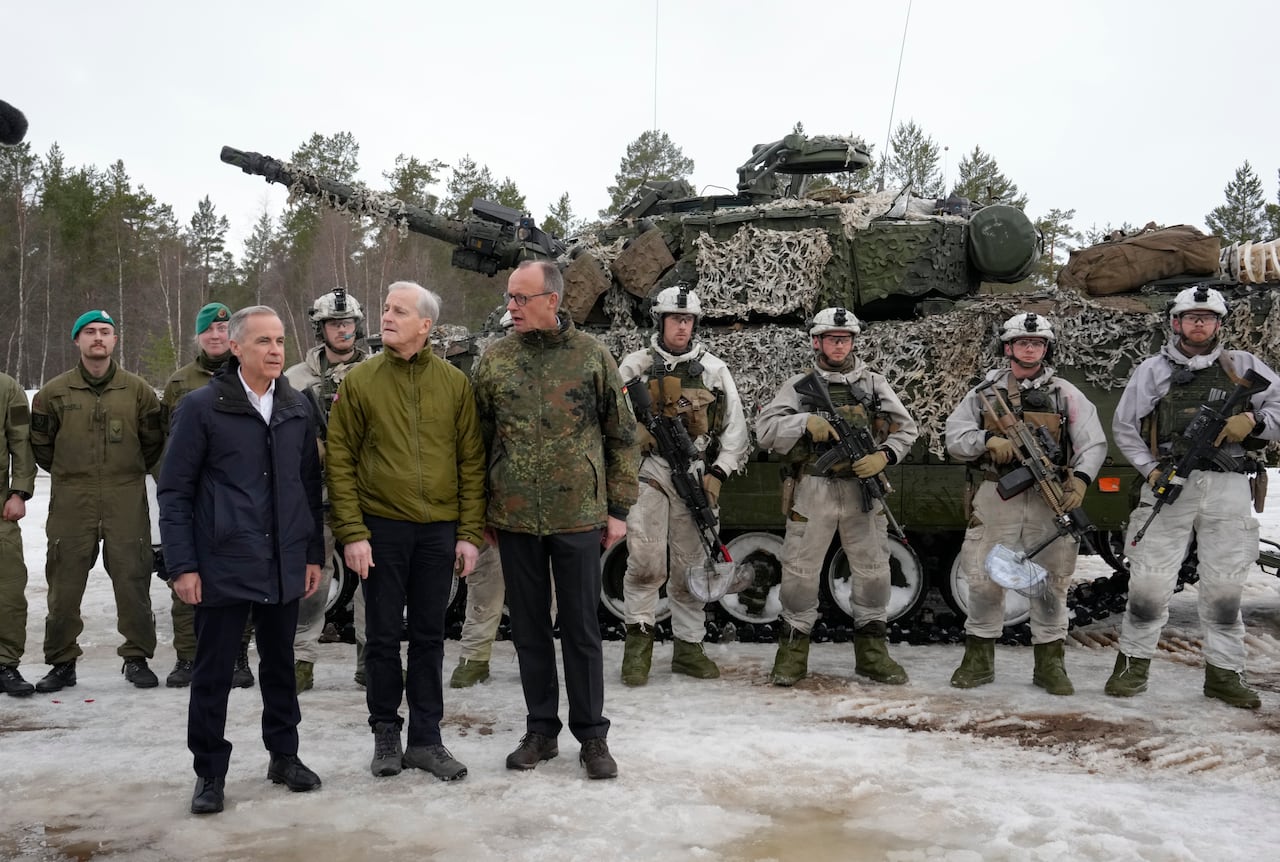
Carney stands with his German and Norwegian counterparts as they observe a military exercise earlier this month. (Adrian Wyld/The Canadian Press)
The impact of international travel is often assessed based on the agreements made or the images broadcasted back to Canadian citizens. However, Buck emphasizes that personal interactions are vital for fostering relationships among leaders — establishing the trust and understanding that can be leveraged in the future.
If cultivating new trading partners and forging new alliances is pivotal to Carney’s agenda — if these actions are indeed necessary for Canada’s future — it is reasonable to question whether the Carney administration may undermine its own efforts by reducing foreign aid and implementing budget cuts at Global Affairs Canada. Buck argues that officials at GAC can play a crucial role in connecting Canadian businesses with new partners.
It is important to note that despite Carney’s desire or necessity to shift his focus beyond North America — and the fact that Canadians may appreciate this — there remain significant domestic issues that cannot be overlooked. Brodie’s concern was that the Carney administration might not be adequately addressing national unity challenges in Alberta and Quebec. Additionally, the affordability of housing could be the Carney government’s most significant vulnerability.
However, it seems that Canadians and their prime ministers may no longer be able to treat Canadian foreign policy as a mere secondary or academic matter.