
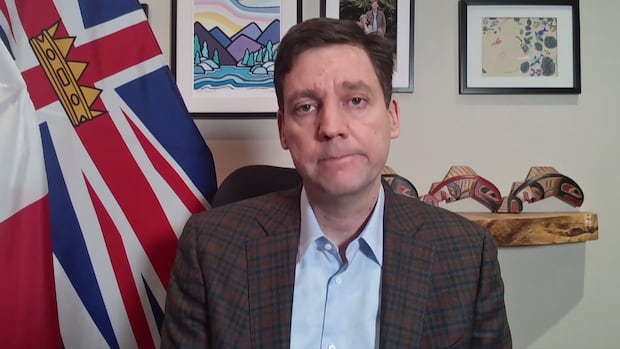
British Columbia Premier David Eby remains steadfast in his stance against the Alberta separatist movement seeking external support, labeling it as an act of treason. However, caution is advised by an analyst against using such strong language at a time when national unity in Canada is crucial.
Eby’s remarks were made during discussions with other Canadian leaders in Ottawa following reports of interactions between members of U.S. President Donald Trump’s administration and the Alberta Prosperity Project, a group advocating for Alberta’s independence. The group has reportedly approached the U.S. Treasury for a $500 billion line of credit to support their bid for sovereignty in a potential referendum. While the U.S. State Department acknowledged the meetings, they clarified that no commitments were made.
Describing the act of seeking foreign assistance to dismantle Canada as treason, Eby reiterated his stance during an interview on CBC’s The Early Edition. He emphasized that soliciting support from foreign governments to break up the country constitutes treason, questioning the values upheld by Canadians in such circumstances.
Although Eby supports provinces engaging in discussions about Canada’s national framework, he expressed concerns about the timing given Trump’s recent actions, such as expressing interest in acquiring Greenland and imposing tariffs on Canadian products. He underscored the inopportune nature of such conversations amid ongoing international tensions.
According to Canada’s Criminal Code, treason encompasses various activities detrimental to the country’s safety or defense, including communicating sensitive information to foreign entities. The penalty for treason is imprisonment.
The characterization of the Alberta Prosperity Project’s meetings with the U.S. administration as treason is disputed by project co-founder Jeffrey Rath, who denounced the accusation as defamatory and criticized it as a political maneuver by Eby.
Data analyst John Santos from Calgary warned against the inflammatory rhetoric, suggesting that it could fuel separatist sentiments and potentially sway individuals towards supporting separatism. Drawing parallels to the Brexit referendum, Santos highlighted the risks of alienating individuals through divisive language, potentially leading to a surge in separatist inclinations.
In conclusion, the use of provocative language in political discourse, particularly concerning matters of national unity, carries inherent risks and could inadvertently exacerbate existing divisions within the community.