
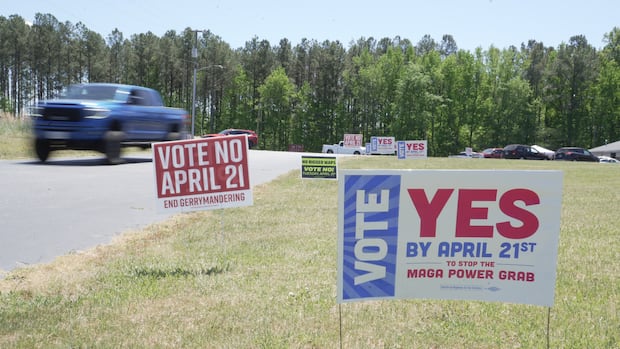
Virginia voters have approved a mid-decade redistricting plan that could potentially give Democrats the advantage of winning four extra U.S. House seats during the upcoming midterm elections in November. This constitutional amendment, narrowly supported by voters, bypasses a bipartisan redistricting commission. The state Supreme Court is currently reviewing the plan’s legality, which could render the referendum results inconsequential. This move comes in the wake of President Donald Trump initiating a national redistricting battle last year by urging Texas Republican officials to redraw districts to enhance the GOP’s chances in the elections.
Trump’s objective was to secure more Republican seats in the November elections and maintain a slim House majority against the backdrop of historical midterm election trends favoring the opposition party. Traditionally, congressional redistricting occurred once every ten years following the census. Prior to the election, Trump urged Virginians via social media to vote against the plan, claiming it was crucial to “SAVE YOUR COUNTRY!”
The Democrats framed the Virginia redistricting as a response to Trump’s initiatives, aiming to counter other states’ efforts to tilt the scales in favor of the Republicans in congressional elections. Former President Barack Obama was featured in advertisements supporting the “yes to redistricting” campaign.
Despite the referendum results, Republicans have vowed to challenge Virginia’s new map in court. The current 217-213 House seat advantage held by Republicans, with one independent who aligns with the GOP, puts the party at risk of losing ground. Democrats only need to gain a few seats in November to seize control of the House, potentially enabling them to impede Trump’s agenda or initiate impeachment proceedings. The upcoming elections are crucial, with Trump’s administration facing voter disapproval over its economic policies and deportation actions.
In Virginia, Democrats currently hold six out of the 11 U.S. House seats, with the new redistricting plan potentially enabling them to win up to ten seats. The proposed map redistributes districts, concentrating Democratic influence in northern Virginia while diluting conservative voting blocs in Richmond, southern Virginia, and Hampton Roads. Additionally, the reshaped map in western Virginia combines three Democratic-leaning college towns to counterbalance Republican voters.
The redistricting competition continues, with Florida’s Republican Governor Ron DeSantis calling a special session to reconsider the state’s map. Meanwhile, the U.S. Supreme Court is deliberating a voting rights case in Louisiana that could empower southern Republican states to target more Democratic seats. Despite assumptions about voting patterns in the districts, the upcoming elections present a level of uncertainty, with a significant turnover in incumbents not witnessed since 1992, according to the Brookings Institution’s Congress statistics tracking.