
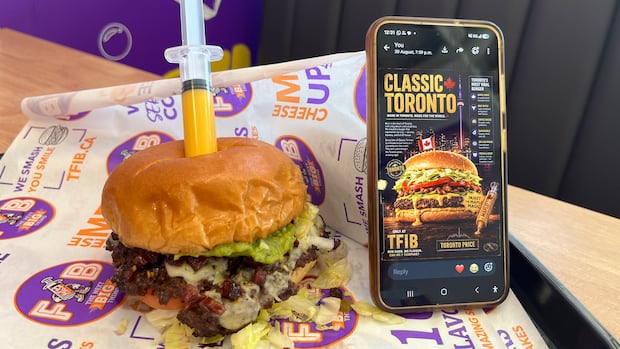
From whimsical sandwiches to shrimp shaped like doughnuts, artificial intelligence (AI) is making its way onto the menus of fast-food restaurants. Diners have been sharing online photos of food displays that appear artificial and surreal, possibly created using AI tools that make it cost-effective to produce visuals.
Some customers have expressed dismay at the AI-generated food images, describing them as alien-like and unappetizing. The use of such imagery has raised concerns among Toronto diners, with some viewing it as inauthentic and a reflection of a restaurant’s values.
While some consumers find these AI-enhanced images off-putting and worry about potential misrepresentations, restaurant industry insiders highlight the cost-saving benefits of using AI in a challenging economic landscape. Marketing experts suggest that, when executed thoughtfully, the use of AI technology in food imagery can be advantageous.
Business consultant David Pullara emphasizes the importance of appealing food photography in driving consumer choices. He notes that while poorly generated AI images can harm sales and brand perception, judicious use of AI can help small businesses manage costs in an industry known for slim margins.
Fez Mian, a marketing manager at a Canadian burger franchise, shares how they leverage AI applications to enhance food images swiftly and economically, reducing reliance on professional photographers. By streamlining the process through AI, businesses like theirs can create and share marketing content more efficiently, especially on social media platforms.
Regarding concerns about potential false advertising, marketing professor David Soberman cautions against misleading representations but suggests that consumers generally understand the disparity between promotional imagery and actual food items. At The Fancy Induced Burger, human oversight ensures that AI-enhanced images maintain accuracy and transparency.
While AI technology offers benefits in terms of cost-effectiveness and efficiency, some industry professionals, like food stylist Zoe Rousseau, believe that the personal touch and authenticity of human-led food styling can’t be replicated by AI. They advocate for a balance between technological innovation and traditional styling methods to enhance the overall dining experience.
Overall, as the debate continues over the role of AI in restaurant imagery, businesses are encouraged to strike a balance between leveraging technology for efficiency and preserving the authenticity and quality of their food presentations.